I've just looked back at the column I wrote following the Government's anouncement and seen the ludicrous intro the subs put on the top of my story. Originally, I'd made some comment about Steve Maharey referring to digital TV as being the biggest thing in the TV industry that he could remember since the switch from black and white to colour TV. All of that disappeared. Instead you get the below into which suggests I was around at the time to compare the two events. I certainly wasn't around for the switch to colour in 1973. I wasn't even born...
Peter Griffin: Digital TV just in time to provide content for the net
Friday June 23, 2006
The public's response to the unveiling of the Government's plans for digital television last week was muted compared with the introduction of colour television.
It did not help that the Government, TVNZ and CanWest were not able to reveal what will be on the new digital channels. Surely there could have been one channel announcement to whet our appetites, like the unveiling of Parliament TV or a 24-hour news channel - something to make this revolutionary change tangible.
Instead the focus was on how much digital TV will cost - about $75 million shared between the Government and broadcasters before programming costs are built in.
The set-top box to receive the service will cost $200 a household. It is peanuts - the Ministry of Justice is about to embark on a couple of IT projects that could cost up to $500 million over the seven years.
But because of the big question-mark over what content digital TV will serve up on all these new channels, the country barely blinked at the announcement.
It came just weeks after the more significant news that Telecom's network will be opened to competitors.
It's a shame about the public indifference because the Government's Freeview model has been a screaming success in the United Kingdom.
It has delivered to the Brits everything digital TV can - better picture and sound quality, widescreen programming, interactive services and a bundle of new channels.
But more importantly, the Freeview model has given viewers a compelling alternative to pay TV operator BSkyB, which also provides some of its content on Freeview.
Digital TV was launched in Britain in 1998 with the help of a €6.5 million grant from the European Union, but Freeview did not start until 2002, rising from the ashes of the defunct ONDigital TV network.
Since then Freeview has been one of the most successful technology stories in Britain, the Apple iPod of the TV world.
Freeview, with 7.1 million household viewers, is more popular than analog television which has 6.4 million viewers.
Sky has 8.1 million subscribers but will be overtaken by Freeview as Britain's largest digital TV platform by the end of the year if its rival's present rate of growth continues.
Some TVs have Freeview digital TV tuners built into them so you don't have to buy a digital set-top box. The same sets are available here from makers such as Loewe, which hopefully will be compatible with New Zealand Freeview.
Freeview has no monthly subscription, as the name implies. The BBC's content is subsidised by the TV licence fee household viewers pay in Britain.
Advertising props up the business models of the other broadcasters, such as ITV.
Kiwis will pay no licence fee for Freeview so the whole venture will be funded purely through advertising, with a little money no doubt thrown in by the Government for local programming.
Digital TV will have no local content quota, which will probably sit well with viewers who mainly just want to stop having to shell out for a Sky subscription.
Most people will probably be happy to buy a digital set-top box for $200 in order to get a 24-hour news channel, some local and regional programming and a couple of channels running foreign drama, documentaries and sitcoms.
The problem is that Sky has been making hay while the politicians and free-to-air broadcasters have dithered.
Sky have entrenched subscribers, and some have upgraded to the My Sky personal video recorder and and thus set themselves up for the long term. It is a travesty that digital TV has taken so long to be taken seriously in this country, but a positive side-effect of the late adoption is that digital TV will develop alongside internet TV.
Digital and internet TV go hand in hand because programming converted into the digital format can be easily broadcast at high quality over the internet.
Telecom is now talking about having 24 megabit per second internet services available in some areas of the country by the end of the year.
But even lower-speed connections are capable of delivering TV over the phone network. The planned Government unbundling of Telecom's network will only hasten the development of such services.
Before the transmission towers have been converted to digital and the satellite has been readied to broadcast digital free-to-air we could have a much more efficient delivery model at our disposal - the Telecom network. But digital TV won't be a white elephant. The Government will eventually turn off the ageing analog network, thus forcing everyone along the logical upgrade path. Now it's time for the broadcasters to offer some compelling content.
1 Aug 2006


IT'LL LOOK GREAT ON THE TV...
I've been immersed in discussion on digital TV of late, even went on Media Watch to talk about what it might mean for the country. It was a bad performance so I won't link to it. Below however are a handful of articles on the subject of Freeview and the coming launch of digital free-to-air TV.
Both sides of thisd argument are strong. I can see Freeview's desire to make digital TV a standardised thing for viewers and therefore limit the number of options. I can also understand the frustration of industry players like Peter Escher of Satlink. The bottom line is, all those unaccredted set-top boxes will work with Freeview, but you won't get the interactive services. For many people, that's not a concern. This debate will be resurrected when the boxes actually go on sale next year. Hopefully I'll be able to have a look at the full range of accredited and unaccredited boxes and compare them all in reviews for the Herald.
Digital TV restrictions for set-top boxes cause ruckus
Tuesday August 1, 2006By Peter Griffin
An industry fight is brewing over who will get to supply the set-top boxes needed to receive digital TV when it launches next year.
Set-top box distributors are angry that they are being excluded from an accreditation programme set up by the Freeview consortium comprising the companies that will implement free-to-air digital TV: TVNZ, CanWest, the Racing Board, Radio New Zealand and Maori TV.
Freeview has given two to three set-top box manufacturers and local distributors 12 months of exclusivity from the launch of satellite digital TV, scheduled for March next year. During the first year, these as-yet unnamed companies will be the only accredited suppliers of Freeview certified equipment, which Freeview claims will be sold mainly through traditional electronics stores.
The Government expects 37 per cent of the population to be using free-to-air digital TV by 2015.
If 1.5 million set-top boxes are sold over the next nine years at an average price of $200, the market for set-top boxes could be worth $300 million. Satellite and aerial antenna installation costs would add substantially to that figure.
The deal is a major blow for the independent set-top box distributors that want to tap into that market.
They accuse Freeview of trying to exert "market control" and are considering making a complaint to the Commerce Commission.
Several distributors contacted by the Herald said they had been told they would not be accredited because their set-top boxes did not meet the required specifications. They have been forbidden from using the Freeview name in marketing their products, despite the fact that the Freeview consortium has no trademark over the word "Freeview".
"They're carving the turkey up on the table," said one distributor who did not want to be named.
"It means less choice for consumers because they'll be reluctant to buy set-top boxes that don't have the Freeview stamp on them."
Existing MPEG-2 digital set-top boxes will be able to receive digital TV broadcasts and are already able to pick up a test signal from the Waiatarua TV mast covering Auckland.
But the main stumbling block for existing set-top box manufacturers is meeting Freeview's standards for so-called MHEG-5 middleware, which would let you access interactive services through your TV.
"The digital set-top boxes will work, however, for Freeview to be capable of anything other than linear TV, you have to have certain smarts in the box," the Freeview spokesman said.
Interactive services could include casting votes by pressing a button on your remote control or bringing up on-screen text to add greater context to a programme.
Interactivity is seen as an attractive choice for advertisers, because it would let consumers order their products at the same time they saw the advertised product on TV.
The interactive component would use your phone line to return information to a central computer in the same way that Sky's set-top boxes connect to your phone line to provide interactive services such as its TV email service.
Another requirement known as "blind scan" automatically finds new channels and adds them to you channel list as they become available.
Freeview said it contacted 30 set-top box manufacturers more than a year ago to inform them of its requirements.
"A number of the Asian-based manufacturers aren't interested in doing [interactivity]," said the spokesman. He said the exclusive deal for the first year was necessary to get manufacturers and retailers on board.
"We're asking [manufacturers] to do something on a satellite box that hasn't been done before," he said.
"Retailers will walk away if they get more than 2 per cent [of sold set-top boxes] back as warranty returns."
But set-top box distributors spoken to by the Herald said the standard was too onerous and that interactive services were unlikely to have mass appeal.
One distributor said he sold 20 models of set-top boxes, none of which included interactivity but all of which could receive digital TV. His cheapest set-top box sold for $159 and he would discount it further to compete with the accredited boxes, which were expected to sell for around $200.
Freeview would consider applications from local distributors further down the track, but wanted to regulate the supply of set-top boxes to avoid the "complete mess" that occurred in the early days of Australian digital TV.
Satellite expert Bob Cooper weighed into the Freeview argument in his SatFacts newsletter, saying the move by the consortium set a high quality standard but would limit the options for consumers.
"TVNZ in particular fears a flood of cheap, stripped-down set-top boxes, the kind that retail for $100 or even less, primarily because there remains at TVNZ a cadre of folks who are firmly committed to Teletext and 'interactivity', whatever than may ultimately mean."
But he added: "For TVNZ to mandate through an inward-looking 'certification process' that only [interactive] complaint units be sold 'with their approval' will result in less choice, giving them a marketplace power perhaps never intended by the Government," wrote Cooper.
But while Freeview has set the bar high for some digital TV services, it will be sticking with the current MPEG-2 video encoding standard rather than the more advanced MPEG-4 standard needed to receive high-definition television, which is already available in other countries.
The newer standard boxes are in hot demand but short supply.
BSKyB in Britain has had problems launching a high-definition satellite service because satellite receiver makers have been unable to make the equipment available in sufficient quantities.
"You'll need a higher-specified set-top box for high-definition TV," said the Freeview spokesman, who expected 80 per cent of the market to go to accredited set-top box makers.
"It's just a guess, it depends on how many [consumers] choose to go the accredited route," he added.
Peter Escher, of Auckland satellite distributor Satlink said a group of distributors would band together to market and sell non-accredited set-top boxes.
"This Freeview 'proactive group', does not support restrictive supply and marketing practices, hence we are offering direct to the New Zealand public a cost-efficient alternative, which incorporates a wider channel availability to the public."
He claimed to be able to offer a set-top box that would receive the digital channels provided by Freeview as well as other channels received via one modified satellite dish.
"There are up to 40 channels available compared to Freeview's 18."
While TVNZ originally applied for a trademark on the "Freeview" name in 2004, it abandoned the application last year. Escher now has his own application in for the trademark and has reserved the web domain www.freeviewnz.co.nz.
But distributors have been told to drop the Freeview name from their marketing.
"They've made me stop putting Freeview in the description and they don't have any right to do that," said one distributor.
The Freeview spokesman said the "Freeview" name was used informally and might no longer be used when the service was launched.
Freeview was also looking at applying for a modified trademark that might incorporate the name.
FEEDBACK:
From Kent:
Strange how often journalists cant do math:"The Government expects 37 per cent of the population to be using free-to-air digital TV by 2015."The article goes on to say:"If 1.5 million set-top boxes are sold over the next nine years at an average price of $200, the market for set-top boxes could be worth $300 million."They calculated it based on 37% of 4,000,000.
However, why does every man, woman and child need a set top box? Surely, it will be 37% of households.There are 1.4 million households in NZ. That's about 0.5 million set top boxes at $200 or a $100 million market.http://www.stats.govt.nz/products-and-services/new-zealand-in-profile-2006/Households.htm
My response:
Hi Kent,
thanks for your email. I admit, the way the article is worded, it looks as though we simply assumed 37 per cent of the population would be buying set-top boxes. But a number of other things led to the $300 million figure. They include:
1) Satellite expert Bob Cooper predicting the market would absorb, over that period, 2 million set top boxes at the most.
2) The refresh rate of set-top boxes over that nine year period as people sell their initial $200 boxes in favour of personal video recorder boxes or boxes that support MPEG-4 HDTV or come with Ethernet capability.
3) Portable digital tuner cards for computer media centres and laptops which are becoming very popular.
4) Other places where TVs are - hotels, businesses, second homes etc.
When you consider all those things, a conservative take up of 1.5 million set-top boxes seems realistic, Then you've got antennae costs and installation on top of that. It's a big market opportunity for manufacturers and retailers.
From Laurence:
You note in your column about digital STB'sBut while Freeview has set the bar high for some digital TV services, it will be sticking with the current MPEG-2 video encoding standard rather than the more advanced MPEG-4 standard needed to receive high-definition television, which is already available in other countries.
In fact in the US, where there is the highest availability of HDTV, the majority of transmission, whether OTA, cable or satellite is in MPEG2. Satellite companies are looking at MPEG4 only because they can increase quality with a lower bandwidth. So HDTV can be delivered over MPEG2, both OTA and from a satellite.I have also heard reports from US folks who are moving to MPEG4 that they need to upgrade both their STB's and also their dishes to one that is almost 1M in diameter. This means for those with Sky dishes, to receive MPEG4 they would likely need to upgrade their dishes also.
My response:
You're right, a lot of broadcasters, including some in Australia do HDTV that's receivable via MPEG-2-compatible set-top boxes. But they are moving to MPEG-4 now because it allows a better way to deliver high-quality pictures using less bandwidth.
It's not just for straight satellite and terrestrial transmission that the broadcasters want to move to MPEG-4. Locally, Telecom wants to do IPTV over its DSL network and all around the world, telcos and internet companies have piled into video on demand and IPTV. Repurposing their content for these types of applications is easier when MPEG-4 is used because its better at delivering conpressed feeds at limited bit rates.
TVNZ has told me that consumers will have to upgrade to a new box to receive HDTV which suggests to mw that when Freeview goes high definition, which will be years away anyway, they will do MPEG-4. They may even simulcast MPEG-4 and MPEG-2 if they haven't eaten up all of their capacity by then.
From Greg:
I have just read your article 'Digital TV restrictions for set-top boxes cause ruckus'.You state that the Freeview consortium will be 'sticking with' MPEG2 which will exclude high definition broadcasting.Do you know if there is a roadmap to offer HD either by Freeview or other broadacasters, or if Freeview will transmit in widescreen?
My response:
Freeivew will transmit in widescreen for certain channels which is great for movies, sports events and even TV.
While strictly speaking you can do high definition TV with MPEG-2 set-top boxes, TVNZ told me that viewers will have to upgrade to a new box to receive high-definition TV. It looks therefore like Freeview will bring in MPEG-4 compatible boxes to launch HDTV. There's currently no public roadmap for HDTV here. I personally think it'll be a few years away, especially on the terrestrial side. Sky TV will probably be the first broadcaster to implement HDTV here, via the Optus D1 satellite.
From Jim:
Peter, Re: "Freeview" - good piece.I enjoyed the clarity of your writing, Cheers
Both sides of thisd argument are strong. I can see Freeview's desire to make digital TV a standardised thing for viewers and therefore limit the number of options. I can also understand the frustration of industry players like Peter Escher of Satlink. The bottom line is, all those unaccredted set-top boxes will work with Freeview, but you won't get the interactive services. For many people, that's not a concern. This debate will be resurrected when the boxes actually go on sale next year. Hopefully I'll be able to have a look at the full range of accredited and unaccredited boxes and compare them all in reviews for the Herald.
Digital TV restrictions for set-top boxes cause ruckus
Tuesday August 1, 2006By Peter Griffin
An industry fight is brewing over who will get to supply the set-top boxes needed to receive digital TV when it launches next year.
Set-top box distributors are angry that they are being excluded from an accreditation programme set up by the Freeview consortium comprising the companies that will implement free-to-air digital TV: TVNZ, CanWest, the Racing Board, Radio New Zealand and Maori TV.
Freeview has given two to three set-top box manufacturers and local distributors 12 months of exclusivity from the launch of satellite digital TV, scheduled for March next year. During the first year, these as-yet unnamed companies will be the only accredited suppliers of Freeview certified equipment, which Freeview claims will be sold mainly through traditional electronics stores.
The Government expects 37 per cent of the population to be using free-to-air digital TV by 2015.
If 1.5 million set-top boxes are sold over the next nine years at an average price of $200, the market for set-top boxes could be worth $300 million. Satellite and aerial antenna installation costs would add substantially to that figure.
The deal is a major blow for the independent set-top box distributors that want to tap into that market.
They accuse Freeview of trying to exert "market control" and are considering making a complaint to the Commerce Commission.
Several distributors contacted by the Herald said they had been told they would not be accredited because their set-top boxes did not meet the required specifications. They have been forbidden from using the Freeview name in marketing their products, despite the fact that the Freeview consortium has no trademark over the word "Freeview".
"They're carving the turkey up on the table," said one distributor who did not want to be named.
"It means less choice for consumers because they'll be reluctant to buy set-top boxes that don't have the Freeview stamp on them."
Existing MPEG-2 digital set-top boxes will be able to receive digital TV broadcasts and are already able to pick up a test signal from the Waiatarua TV mast covering Auckland.
But the main stumbling block for existing set-top box manufacturers is meeting Freeview's standards for so-called MHEG-5 middleware, which would let you access interactive services through your TV.
"The digital set-top boxes will work, however, for Freeview to be capable of anything other than linear TV, you have to have certain smarts in the box," the Freeview spokesman said.
Interactive services could include casting votes by pressing a button on your remote control or bringing up on-screen text to add greater context to a programme.
Interactivity is seen as an attractive choice for advertisers, because it would let consumers order their products at the same time they saw the advertised product on TV.
The interactive component would use your phone line to return information to a central computer in the same way that Sky's set-top boxes connect to your phone line to provide interactive services such as its TV email service.
Another requirement known as "blind scan" automatically finds new channels and adds them to you channel list as they become available.
Freeview said it contacted 30 set-top box manufacturers more than a year ago to inform them of its requirements.
"A number of the Asian-based manufacturers aren't interested in doing [interactivity]," said the spokesman. He said the exclusive deal for the first year was necessary to get manufacturers and retailers on board.
"We're asking [manufacturers] to do something on a satellite box that hasn't been done before," he said.
"Retailers will walk away if they get more than 2 per cent [of sold set-top boxes] back as warranty returns."
But set-top box distributors spoken to by the Herald said the standard was too onerous and that interactive services were unlikely to have mass appeal.
One distributor said he sold 20 models of set-top boxes, none of which included interactivity but all of which could receive digital TV. His cheapest set-top box sold for $159 and he would discount it further to compete with the accredited boxes, which were expected to sell for around $200.
Freeview would consider applications from local distributors further down the track, but wanted to regulate the supply of set-top boxes to avoid the "complete mess" that occurred in the early days of Australian digital TV.
Satellite expert Bob Cooper weighed into the Freeview argument in his SatFacts newsletter, saying the move by the consortium set a high quality standard but would limit the options for consumers.
"TVNZ in particular fears a flood of cheap, stripped-down set-top boxes, the kind that retail for $100 or even less, primarily because there remains at TVNZ a cadre of folks who are firmly committed to Teletext and 'interactivity', whatever than may ultimately mean."
But he added: "For TVNZ to mandate through an inward-looking 'certification process' that only [interactive] complaint units be sold 'with their approval' will result in less choice, giving them a marketplace power perhaps never intended by the Government," wrote Cooper.
But while Freeview has set the bar high for some digital TV services, it will be sticking with the current MPEG-2 video encoding standard rather than the more advanced MPEG-4 standard needed to receive high-definition television, which is already available in other countries.
The newer standard boxes are in hot demand but short supply.
BSKyB in Britain has had problems launching a high-definition satellite service because satellite receiver makers have been unable to make the equipment available in sufficient quantities.
"You'll need a higher-specified set-top box for high-definition TV," said the Freeview spokesman, who expected 80 per cent of the market to go to accredited set-top box makers.
"It's just a guess, it depends on how many [consumers] choose to go the accredited route," he added.
Peter Escher, of Auckland satellite distributor Satlink said a group of distributors would band together to market and sell non-accredited set-top boxes.
"This Freeview 'proactive group', does not support restrictive supply and marketing practices, hence we are offering direct to the New Zealand public a cost-efficient alternative, which incorporates a wider channel availability to the public."
He claimed to be able to offer a set-top box that would receive the digital channels provided by Freeview as well as other channels received via one modified satellite dish.
"There are up to 40 channels available compared to Freeview's 18."
While TVNZ originally applied for a trademark on the "Freeview" name in 2004, it abandoned the application last year. Escher now has his own application in for the trademark and has reserved the web domain www.freeviewnz.co.nz.
But distributors have been told to drop the Freeview name from their marketing.
"They've made me stop putting Freeview in the description and they don't have any right to do that," said one distributor.
The Freeview spokesman said the "Freeview" name was used informally and might no longer be used when the service was launched.
Freeview was also looking at applying for a modified trademark that might incorporate the name.
FEEDBACK:
From Kent:
Strange how often journalists cant do math:"The Government expects 37 per cent of the population to be using free-to-air digital TV by 2015."The article goes on to say:"If 1.5 million set-top boxes are sold over the next nine years at an average price of $200, the market for set-top boxes could be worth $300 million."They calculated it based on 37% of 4,000,000.
However, why does every man, woman and child need a set top box? Surely, it will be 37% of households.There are 1.4 million households in NZ. That's about 0.5 million set top boxes at $200 or a $100 million market.http://www.stats.govt.nz/products-and-services/new-zealand-in-profile-2006/Households.htm
My response:
Hi Kent,
thanks for your email. I admit, the way the article is worded, it looks as though we simply assumed 37 per cent of the population would be buying set-top boxes. But a number of other things led to the $300 million figure. They include:
1) Satellite expert Bob Cooper predicting the market would absorb, over that period, 2 million set top boxes at the most.
2) The refresh rate of set-top boxes over that nine year period as people sell their initial $200 boxes in favour of personal video recorder boxes or boxes that support MPEG-4 HDTV or come with Ethernet capability.
3) Portable digital tuner cards for computer media centres and laptops which are becoming very popular.
4) Other places where TVs are - hotels, businesses, second homes etc.
When you consider all those things, a conservative take up of 1.5 million set-top boxes seems realistic, Then you've got antennae costs and installation on top of that. It's a big market opportunity for manufacturers and retailers.
From Laurence:
You note in your column about digital STB'sBut while Freeview has set the bar high for some digital TV services, it will be sticking with the current MPEG-2 video encoding standard rather than the more advanced MPEG-4 standard needed to receive high-definition television, which is already available in other countries.
In fact in the US, where there is the highest availability of HDTV, the majority of transmission, whether OTA, cable or satellite is in MPEG2. Satellite companies are looking at MPEG4 only because they can increase quality with a lower bandwidth. So HDTV can be delivered over MPEG2, both OTA and from a satellite.I have also heard reports from US folks who are moving to MPEG4 that they need to upgrade both their STB's and also their dishes to one that is almost 1M in diameter. This means for those with Sky dishes, to receive MPEG4 they would likely need to upgrade their dishes also.
My response:
You're right, a lot of broadcasters, including some in Australia do HDTV that's receivable via MPEG-2-compatible set-top boxes. But they are moving to MPEG-4 now because it allows a better way to deliver high-quality pictures using less bandwidth.
It's not just for straight satellite and terrestrial transmission that the broadcasters want to move to MPEG-4. Locally, Telecom wants to do IPTV over its DSL network and all around the world, telcos and internet companies have piled into video on demand and IPTV. Repurposing their content for these types of applications is easier when MPEG-4 is used because its better at delivering conpressed feeds at limited bit rates.
TVNZ has told me that consumers will have to upgrade to a new box to receive HDTV which suggests to mw that when Freeview goes high definition, which will be years away anyway, they will do MPEG-4. They may even simulcast MPEG-4 and MPEG-2 if they haven't eaten up all of their capacity by then.
From Greg:
I have just read your article 'Digital TV restrictions for set-top boxes cause ruckus'.You state that the Freeview consortium will be 'sticking with' MPEG2 which will exclude high definition broadcasting.Do you know if there is a roadmap to offer HD either by Freeview or other broadacasters, or if Freeview will transmit in widescreen?
My response:
Freeivew will transmit in widescreen for certain channels which is great for movies, sports events and even TV.
While strictly speaking you can do high definition TV with MPEG-2 set-top boxes, TVNZ told me that viewers will have to upgrade to a new box to receive high-definition TV. It looks therefore like Freeview will bring in MPEG-4 compatible boxes to launch HDTV. There's currently no public roadmap for HDTV here. I personally think it'll be a few years away, especially on the terrestrial side. Sky TV will probably be the first broadcaster to implement HDTV here, via the Optus D1 satellite.
From Jim:
Peter, Re: "Freeview" - good piece.I enjoyed the clarity of your writing, Cheers
TAXING TIMES FOR TECH SECTOR
I foolishly waded into the debate surrounding the proposed introduction of a capital gains tax on foreign investments. It was foolish because it's required a lot of research on my part of a particularly complex and confusing bill. Still, after reading the comments of people in the IT industry and talking to people who could be affected adversely by the capital gains tax, I felt compelled to write something.
Here's the column I wrote in the Herald on the subject. It's followed by Dr. Cullen's indignant response and my own right of reply:
Peter Griffin: New tax spells doom for Silicon Valley south
Tuesday July 25, 2006
The Government's tax and investment policies have done nothing over the past six years to give the IT industry the kick-start it desperately needs to become internationally competitive.
Now a proposed capital gains tax on foreign investment threatens to extinguish the hopes of New Zealand technology companies attempting to tap capital markets abroad.
Forget trying to replicate the "Silicon Valley effect" in New Zealand. Forget mimicking Singapore, Ireland, Israel and China, whose investment and tax policies let innovative companies grow at home and abroad.
All I see ahead is more of the same for New Zealand's IT industry - piecemeal grants dished out here and there, little offered to entice IT multinationals who want to invest locally and an environment that makes it more attractive to sell your entire company than pursue global expansion using an overseas stock market listing.
Add to that the acute skills shortage fuelled by the exodus of our best graduates across the Tasman and the picture looks grim for the current generation of IT start-ups.
By now you're probably familiar with the details of the tax change: the new regime would tax 85 per cent of the rise in value of an investor's portfolio of non-Australasian shares, provided it originally cost more than $50,000 and hasn't depreciated in value below that level.
The amount taxable in any one year is capped at 5 per cent of the market value at the start of the year. Any gain above that cap is carried forward but ultimately all 85 per cent of the income will be taxed in subsequent years. It means that those who are rewarded for diversifying their investments will be penalised when they bring their money home, leaving them less to reinvest back in New Zealand.
This tax will hit everyone who invests overseas, but the impact on the technology sector will be particularly great. That's because New Zealand companies working in software and hardware development, nanotechnology and biotechnology, eventually have to go to where the market action is.
That generally involves partnering with companies in the US and Britain, our key technology export markets apart from Australia, and seeking foreign capital. Few New Zealand IT companies list on foreign exchanges. The most successful listing abroad has been Neville Jordan's Nasdaq float of his company MAS Technology.
"It took 20 years for MAS Technology to reach its market capitalisation - when it listed, [this] was around $150 million. Now there are two others and myself who have left the company and realised the share capital gain. We have invested and started up new companies," Jordan told the Herald back in February 2000.
"In the two years since the company listed, and with people leaving and reinvesting their capital, their combined market capitalisation has shot up to what equates to a doubling of the market capitalisation. The net result is that of multiplicity ... this is where you can get the Silicon Valley effect, once you can get enough people reinvesting in New Zealand, this can grow very, very quickly," Jordan added.
The tax change proposed by the Government makes the scenario Jordan outlines less realistic. He embarked on a US listing knowing that if the market capitalisation of his company increased, he would be able to bring the money back to New Zealand for reinvestment without being hit with a capital gains tax.
The Nasdaq listing had an element of risk; it's very expensive to maintain a listing and the level of information you must divulge can serve as market intelligence for your competitors.
With the capital gains tax thrown in, I really can't see why any New Zealand company would list. That's a great shame because listing allows a larger capital market to be accessed while the company's owners and New Zealand-based investors are given an opportunity to share in its success.
Our most successful IT companies have generally been sold to foreign companies, with the exception of navigation instrument maker Rakon, which listed on the NZX last year.
A world leader, Rakon has the potential to be a Nasdaq-listed, New Zealand-controlled company. The capital gains tax means that if it does migrate its listing abroad, its New Zealand shareholders base is likely to disappear.
The proposed tax will also hurt innovative New Zealand companies like biotechnology specialist Virionyx, which plans to keep its operations in New Zealand but float in the US to fund Aids drug trials.
"Having some high-profile successes with some serious money coming back into New Zealand is exactly the shot in the arm that this risk capital sector of the market needs," Virionyx chief executive Simon Wilkinson told the Herald last week. "And against that, this tax will just completely gut it."
There needs, at the very least, to be exemptions for investments in companies that have operations in New Zealand. The US and Britain, the two key markets for the IT industry, should be excluded from the tax change which, according to documents obtained by the Herald, is going to be revenue-neutral anyway - the $40 million cost of excluding Australia expected to be about the same as the extra revenue gained by taxing 85 per cent of share gains in other countries.
The lack of investment in our IT industry, relative to other countries, needs to be addressed not encouraged.
Finance Minister Dr. Michael Cullen responds.
Michael Cullen: One law for all when it comes to taxing gains from outside NZ
Tuesday August 1, 2006
Finance Minister Michael Cullen defends his tax changes on overseas investment, and says a Herald columnist has got it wrong.
Legislation before Parliament includes reform of tax rules on income from investment in shares.
The reform is necessary because the rules for share investment now operate very unevenly.
They overtax some investors, favour direct investment by individuals over investment through managed funds, and favour investment in some countries over investment in others.
The reforms are designed to put the tax treatment of all these types of share investment on the same footing.
In a column last week, under the headline "New tax spells doom for Silicon Valley South", Peter Griffin commented on the Government's overseas tax proposals for share portfolios and their supposed effect on the venture capital industry.
Griffin's column revealed a lack of awareness of how closely the Government is working with the venture capital industry.
This consultation will ensure that venture capital investors who seek funding from overseas capital markets are not adversely affected by the reforms.
Among the sweeping generalisations Griffin made were that "this tax will hit everyone who invests overseas, but the impact on the technology sector will be particularly great" and that the rules would "extinguish the hopes of New Zealand technology companies attempting to tap capital markets abroad" by imposing capital gains tax on any share gains brought back to New Zealand for reinvestment in the company.
Griffin is behind on the state of play. The new rules are not aimed at New Zealand venture capital companies that go overseas to get the money they need to grow.
In calling for an exemption from the rules for new technology companies, Griffin fails to realise that the bill before Parliament recognises the important differences between passive investment in a managed fund and direct investments in venture capital companies that have gone overseas to get foreign money to pay for their next stage of development. This means New Zealand venture capital investors in such companies will be taxed as they are now.
The Government is also well aware that some such venture capital cases fall outside the current exemption in the bill. For this reason, the Government has instructed officials to develop comprehensive proposals to deal with industry concerns.
These steps show the Government is willing to listen to and provide solutions to the venture capital industry's concerns.
With the proposals for research and development credits announced last week as part of the business tax review and the announcement of a limited partnership regime, they send a clear message to the venture capital industry about the Government's commitment to fostering it as a vital component of the Government's economic transformation strategy.
Peter Griffin replies:
Dr Cullen has misunderstood or chosen to ignore the thrust of my argument. He is referring to investments in New Zealand start-ups that are undertaken by venture capital companies.
The proposed tax rules have exemptions to cover these types of investors when the start-ups move overseas. These exemptions need further scrutiny.
But venture capital is only one source of investment for growing technology start-ups, which are often owned by a small handful of shareholders who finance growth in the early stages entirely from revenue and cut costs by taking salaries at below market rates in return for a stake in the company.
At some stage, the company may undertake a public float to fund further growth. It may be more attractive to do this overseas, where there is a greater appetite for technology investment.
A listing on the Nasdaq or FTSE exchanges can also give credibility to a company, and get it noticed by potential customers and partners.
Once listed, these companies will be considered "foreign companies" and under the proposed tax rules a capital gains tax will effectively be applied to the capital gains of its New Zealand investors if the collective shareholding of New Zealanders is below 10 per cent of the company.
Once a public float dilutes the shareholdings of New Zealanders, it is likely that the combined shareholding will be below 10 per cent of the total share allocation.
The company's founders and other New Zealanders who believed in the company and invested in the hope of their shares appreciating will therefore be subject to the capital gains tax if they do anything other than reinvest their gains in more shares.
The proposed tax rules make taking Kiwi companies global less attractive and threatens to alienate investors and employees in companies that have international ambitions.
Here's the column I wrote in the Herald on the subject. It's followed by Dr. Cullen's indignant response and my own right of reply:
Peter Griffin: New tax spells doom for Silicon Valley south
Tuesday July 25, 2006
The Government's tax and investment policies have done nothing over the past six years to give the IT industry the kick-start it desperately needs to become internationally competitive.
Now a proposed capital gains tax on foreign investment threatens to extinguish the hopes of New Zealand technology companies attempting to tap capital markets abroad.
Forget trying to replicate the "Silicon Valley effect" in New Zealand. Forget mimicking Singapore, Ireland, Israel and China, whose investment and tax policies let innovative companies grow at home and abroad.
All I see ahead is more of the same for New Zealand's IT industry - piecemeal grants dished out here and there, little offered to entice IT multinationals who want to invest locally and an environment that makes it more attractive to sell your entire company than pursue global expansion using an overseas stock market listing.
Add to that the acute skills shortage fuelled by the exodus of our best graduates across the Tasman and the picture looks grim for the current generation of IT start-ups.
By now you're probably familiar with the details of the tax change: the new regime would tax 85 per cent of the rise in value of an investor's portfolio of non-Australasian shares, provided it originally cost more than $50,000 and hasn't depreciated in value below that level.
The amount taxable in any one year is capped at 5 per cent of the market value at the start of the year. Any gain above that cap is carried forward but ultimately all 85 per cent of the income will be taxed in subsequent years. It means that those who are rewarded for diversifying their investments will be penalised when they bring their money home, leaving them less to reinvest back in New Zealand.
This tax will hit everyone who invests overseas, but the impact on the technology sector will be particularly great. That's because New Zealand companies working in software and hardware development, nanotechnology and biotechnology, eventually have to go to where the market action is.
That generally involves partnering with companies in the US and Britain, our key technology export markets apart from Australia, and seeking foreign capital. Few New Zealand IT companies list on foreign exchanges. The most successful listing abroad has been Neville Jordan's Nasdaq float of his company MAS Technology.
"It took 20 years for MAS Technology to reach its market capitalisation - when it listed, [this] was around $150 million. Now there are two others and myself who have left the company and realised the share capital gain. We have invested and started up new companies," Jordan told the Herald back in February 2000.
"In the two years since the company listed, and with people leaving and reinvesting their capital, their combined market capitalisation has shot up to what equates to a doubling of the market capitalisation. The net result is that of multiplicity ... this is where you can get the Silicon Valley effect, once you can get enough people reinvesting in New Zealand, this can grow very, very quickly," Jordan added.
The tax change proposed by the Government makes the scenario Jordan outlines less realistic. He embarked on a US listing knowing that if the market capitalisation of his company increased, he would be able to bring the money back to New Zealand for reinvestment without being hit with a capital gains tax.
The Nasdaq listing had an element of risk; it's very expensive to maintain a listing and the level of information you must divulge can serve as market intelligence for your competitors.
With the capital gains tax thrown in, I really can't see why any New Zealand company would list. That's a great shame because listing allows a larger capital market to be accessed while the company's owners and New Zealand-based investors are given an opportunity to share in its success.
Our most successful IT companies have generally been sold to foreign companies, with the exception of navigation instrument maker Rakon, which listed on the NZX last year.
A world leader, Rakon has the potential to be a Nasdaq-listed, New Zealand-controlled company. The capital gains tax means that if it does migrate its listing abroad, its New Zealand shareholders base is likely to disappear.
The proposed tax will also hurt innovative New Zealand companies like biotechnology specialist Virionyx, which plans to keep its operations in New Zealand but float in the US to fund Aids drug trials.
"Having some high-profile successes with some serious money coming back into New Zealand is exactly the shot in the arm that this risk capital sector of the market needs," Virionyx chief executive Simon Wilkinson told the Herald last week. "And against that, this tax will just completely gut it."
There needs, at the very least, to be exemptions for investments in companies that have operations in New Zealand. The US and Britain, the two key markets for the IT industry, should be excluded from the tax change which, according to documents obtained by the Herald, is going to be revenue-neutral anyway - the $40 million cost of excluding Australia expected to be about the same as the extra revenue gained by taxing 85 per cent of share gains in other countries.
The lack of investment in our IT industry, relative to other countries, needs to be addressed not encouraged.
Finance Minister Dr. Michael Cullen responds.
Michael Cullen: One law for all when it comes to taxing gains from outside NZ
Tuesday August 1, 2006
Finance Minister Michael Cullen defends his tax changes on overseas investment, and says a Herald columnist has got it wrong.
Legislation before Parliament includes reform of tax rules on income from investment in shares.
The reform is necessary because the rules for share investment now operate very unevenly.
They overtax some investors, favour direct investment by individuals over investment through managed funds, and favour investment in some countries over investment in others.
The reforms are designed to put the tax treatment of all these types of share investment on the same footing.
In a column last week, under the headline "New tax spells doom for Silicon Valley South", Peter Griffin commented on the Government's overseas tax proposals for share portfolios and their supposed effect on the venture capital industry.
Griffin's column revealed a lack of awareness of how closely the Government is working with the venture capital industry.
This consultation will ensure that venture capital investors who seek funding from overseas capital markets are not adversely affected by the reforms.
Among the sweeping generalisations Griffin made were that "this tax will hit everyone who invests overseas, but the impact on the technology sector will be particularly great" and that the rules would "extinguish the hopes of New Zealand technology companies attempting to tap capital markets abroad" by imposing capital gains tax on any share gains brought back to New Zealand for reinvestment in the company.
Griffin is behind on the state of play. The new rules are not aimed at New Zealand venture capital companies that go overseas to get the money they need to grow.
In calling for an exemption from the rules for new technology companies, Griffin fails to realise that the bill before Parliament recognises the important differences between passive investment in a managed fund and direct investments in venture capital companies that have gone overseas to get foreign money to pay for their next stage of development. This means New Zealand venture capital investors in such companies will be taxed as they are now.
The Government is also well aware that some such venture capital cases fall outside the current exemption in the bill. For this reason, the Government has instructed officials to develop comprehensive proposals to deal with industry concerns.
These steps show the Government is willing to listen to and provide solutions to the venture capital industry's concerns.
With the proposals for research and development credits announced last week as part of the business tax review and the announcement of a limited partnership regime, they send a clear message to the venture capital industry about the Government's commitment to fostering it as a vital component of the Government's economic transformation strategy.
Peter Griffin replies:
Dr Cullen has misunderstood or chosen to ignore the thrust of my argument. He is referring to investments in New Zealand start-ups that are undertaken by venture capital companies.
The proposed tax rules have exemptions to cover these types of investors when the start-ups move overseas. These exemptions need further scrutiny.
But venture capital is only one source of investment for growing technology start-ups, which are often owned by a small handful of shareholders who finance growth in the early stages entirely from revenue and cut costs by taking salaries at below market rates in return for a stake in the company.
At some stage, the company may undertake a public float to fund further growth. It may be more attractive to do this overseas, where there is a greater appetite for technology investment.
A listing on the Nasdaq or FTSE exchanges can also give credibility to a company, and get it noticed by potential customers and partners.
Once listed, these companies will be considered "foreign companies" and under the proposed tax rules a capital gains tax will effectively be applied to the capital gains of its New Zealand investors if the collective shareholding of New Zealanders is below 10 per cent of the company.
Once a public float dilutes the shareholdings of New Zealanders, it is likely that the combined shareholding will be below 10 per cent of the total share allocation.
The company's founders and other New Zealanders who believed in the company and invested in the hope of their shares appreciating will therefore be subject to the capital gains tax if they do anything other than reinvest their gains in more shares.
The proposed tax rules make taking Kiwi companies global less attractive and threatens to alienate investors and employees in companies that have international ambitions.
SEDUCED BY PANDORA
I've posted below my recent Herald on Sunday column on a new service I've been using called Pandora. I urge you to take a look if you're at all interested in discovering good, new music. Some of my readers are also now Pandora converts...
Internet radio opens a Pandora's box
Sunday July 16, 2006By Peter Griffin
I've been spending a lot of time listening to Pandora lately, and I like what I hear.
Pandora is the best new thing in internet radio, a service that, once configured properly, will deliver you a constant stream of music you will actually like. Since I've started using Pandora, commercial radio hasn't had a look-in and even my newly acquired iPod sits unused as Pandora plays.
There are thousands of internet radio stations that let you customise play lists. Most of them are free and provide music in very good audio quality. But none have the intelligence of Pandora.
Based on your musical choices, Pandora goes off and searches its 10,000-artist database for musicians with the same "DNA". I started with a U2 song and was taken on a musical journey through the work of The Police, Peter Gabriel and several artists I'd never heard of before.
As you listen to the songs you can click thumbs up or thumbs down icons to indicate whether you like or dislike the track that's been served up. If you don't like it, Pandora will alter the algorithm used to hone the music selection. After teaching Pandora over the course of a couple of dozen song selections you'll soon get a random playlist that is uncanny in the way it matches your musical tastes.
But a surprising feature of Pandora is that it won't necessarily play much music of the artist you initially request. I punched in the name of composer Hans Zimmer, who is behind the soundtracks for films like The Thin Red Line and Gladiator. But Zimmer didn't feature often; instead, a large range of composers I'd never heard of was served up. I was soon scribbling down the names of these artists because I'll be looking for their albums to buy very soon.
Pandora was launched last year and is the face of the Music Genome database, a play on the Human Genome Project which sought to map human DNA in its entirety.
Pandora categorises music according to dozens of elements, including melody and rhythm, orchestration and lyrics. It finds traits that link various characteristics of music and groups songs according to these traits. It means that you can discover new music by slowly moving beyond artists you love.
I simply put my laptop on top of my stereo, connect the audio cable and stream Pandora's music through my stereo. The audio quality is very good, though you'll really want a minimum 256Kbps broadband connection. The audio stream itself is low-capacity so won't chew through your download cap.
Here's the only hitch with this wonderful service: Pandora is currently only offered to US residents due to issues around international music copyright. The way around this problem is, however, very simple. When signing up you'll be asked to enter a five-digit US postcode to prove your residence in the country. Just enter 90066, a Los Angeles post code or Beverly Hills 90210. There are more listed at www.usps.com.
Pandora is a free service if you agree to have adverts placed amid the songs and on your computer screen. US residents can use their credit cards to pay US$36 (NZ$38) and sign up for a year of ad-free listening. Services like Pandora give you a customisable listening experience without the inane blabber of deejays. The advertising is less intrusive and you get to listen to exactly the type of music you want.
FEEDBACK:
From Geoff:
Your article about Pandora must rate as the most useful piece ofinformation I have received this year!Its fabulous. You are obviously a musophile. I have got about six streamsestablished, from Chillout Electronica to celtic vocalists.....Thanks a million for the write-up!!!
From Deck:
Brilliant article on Pandora -- thanks very much for the lead. I like it so much I'd like to reproduce your article on my Blog ( www.hazen.co.nz/blg) if you don't mind. I've pasted the whole thing there temporarily, but I'll remove it if you wish or edit it down to "excerpts" -- your call.
From Jack from LA:
Thanks for the article on Pandora, it came up on my Google news alert for Peter Gabriel. Who knew I would find such great information about something in my neck of the woods 1/2 way around the world.
Internet radio opens a Pandora's box
Sunday July 16, 2006By Peter Griffin
I've been spending a lot of time listening to Pandora lately, and I like what I hear.
Pandora is the best new thing in internet radio, a service that, once configured properly, will deliver you a constant stream of music you will actually like. Since I've started using Pandora, commercial radio hasn't had a look-in and even my newly acquired iPod sits unused as Pandora plays.
There are thousands of internet radio stations that let you customise play lists. Most of them are free and provide music in very good audio quality. But none have the intelligence of Pandora.
Based on your musical choices, Pandora goes off and searches its 10,000-artist database for musicians with the same "DNA". I started with a U2 song and was taken on a musical journey through the work of The Police, Peter Gabriel and several artists I'd never heard of before.
As you listen to the songs you can click thumbs up or thumbs down icons to indicate whether you like or dislike the track that's been served up. If you don't like it, Pandora will alter the algorithm used to hone the music selection. After teaching Pandora over the course of a couple of dozen song selections you'll soon get a random playlist that is uncanny in the way it matches your musical tastes.
But a surprising feature of Pandora is that it won't necessarily play much music of the artist you initially request. I punched in the name of composer Hans Zimmer, who is behind the soundtracks for films like The Thin Red Line and Gladiator. But Zimmer didn't feature often; instead, a large range of composers I'd never heard of was served up. I was soon scribbling down the names of these artists because I'll be looking for their albums to buy very soon.
Pandora was launched last year and is the face of the Music Genome database, a play on the Human Genome Project which sought to map human DNA in its entirety.
Pandora categorises music according to dozens of elements, including melody and rhythm, orchestration and lyrics. It finds traits that link various characteristics of music and groups songs according to these traits. It means that you can discover new music by slowly moving beyond artists you love.
I simply put my laptop on top of my stereo, connect the audio cable and stream Pandora's music through my stereo. The audio quality is very good, though you'll really want a minimum 256Kbps broadband connection. The audio stream itself is low-capacity so won't chew through your download cap.
Here's the only hitch with this wonderful service: Pandora is currently only offered to US residents due to issues around international music copyright. The way around this problem is, however, very simple. When signing up you'll be asked to enter a five-digit US postcode to prove your residence in the country. Just enter 90066, a Los Angeles post code or Beverly Hills 90210. There are more listed at www.usps.com.
Pandora is a free service if you agree to have adverts placed amid the songs and on your computer screen. US residents can use their credit cards to pay US$36 (NZ$38) and sign up for a year of ad-free listening. Services like Pandora give you a customisable listening experience without the inane blabber of deejays. The advertising is less intrusive and you get to listen to exactly the type of music you want.
FEEDBACK:
From Geoff:
Your article about Pandora must rate as the most useful piece ofinformation I have received this year!Its fabulous. You are obviously a musophile. I have got about six streamsestablished, from Chillout Electronica to celtic vocalists.....Thanks a million for the write-up!!!
From Deck:
Brilliant article on Pandora -- thanks very much for the lead. I like it so much I'd like to reproduce your article on my Blog ( www.hazen.co.nz/blg) if you don't mind. I've pasted the whole thing there temporarily, but I'll remove it if you wish or edit it down to "excerpts" -- your call.
From Jack from LA:
Thanks for the article on Pandora, it came up on my Google news alert for Peter Gabriel. Who knew I would find such great information about something in my neck of the woods 1/2 way around the world.
31 Jul 2006
BACK ON THE BLOGGERLINE...
I set out in December 2005 with noble intentions - to blog regularly, keep this site up to date with interesting tidbits generated by my day job as IT writer for the New Zealand Herald. Well, what an utter failure I've been. Not a single post since January. That would make me a pretty neglectful blogger in anyone's book.
In my defence I'd say the following: I've been damn busy.
Since January, I've travelled extensively to England, Ireland, Germany, Dubai, Singapore, Australia, The US and the Bahamas - only the last island destination and the couple of days I spent in freezing Dublin in March could be classed as holidays. The rest was work related.
I've been heavily involved in making a documentary about which you'll soon hear more. It's related to the War in Iraq and these articles I wrote for the Herald will go some way to explaining what I've been working on: Click here and here.
I also found time to finish to first draft stage the draft of a new feature film screenplay. On top of my regular columns, reviews, features and articles, I haven't had much time for blogging.
Still, I'd like to post some of the articles I've been working on recently and some of the reader responses I've received. I'll be blogginmg regularly form now on because I found to my surprise that punching "peter griffin" into Google now puts me right up the top of the search results. No wonder I've been getting so much spam lately. I feel I owe it to the few dozen people who somehow end up at my site each month to provide some fresh content. Fresh from the film festival I'll also let you know what I thought of some of the movies I caught: definite highlights - Antonioni's The Passenger and The Spanish gem, The Method (El Metode).
My latest column from the Herald on Suunday about Microsoft Zune must have been posted on Mac Central or some other Mac appreciation site in the US, considering the string of abusive emails I got overnight Monday as the Americans read it. The thing is, the column lamented the damage the Zune will do to the current Windows-centric competitors to the iPod. I'm a happy user of my iPod, especially suince I started subscribing to the free podcasts available from iTunes.com. I still think the Zune will be a formidable competitor. Sure, the iPod has 60 per cent market share in music players, but there's plenty of growth in the market and if the Zune works well with Vista and Urge, Microsoft could finally be on to a winner. Never underestimate the boys from Redmond. Sample a selection of my mail on the subject at the end of the article:
Microsoft's Zune set to make a big noise
Sunday July 30, 2006By Peter Griffin
Microsoft has ended months of speculation by admitting it will attack Apple's iPod market when it launches its own music player/multimedia device, the Zune.
By early next year then, the fiercely competitive market for music players is likely to be a two-horse race. Now the Windows-centric music player makers Microsoft has been allied with, will be left to fight for the scraps.
The Zune is bad news for the likes of Creative, iRiver, Toshiba and Cowon, who produce music players that work with Windows Media Player and have been backed by Microsoft as an open alternative to the closed system used by the iPod. The arrival of the Zune is a U-turn in strategy for Microsoft, which, with the exception of the Xbox games console and a line of keyboards and mouses, generally stays out of the hardware game.
Microsoft is unlikely to exclude its current partners from using its music software and online music store Urge, but the level of integration the Zune has with Windows Media Player and Urge will give the Zune an advantage current iPod rivals have been lacking.
Zune therefore makes a lot of sense. It will copy the hugely successful iTunes.com music store model and although the technical specifications haven't yet been released, Microsoft has confirmed that the Zune will come with inbuilt wireless networking, allowing you to update your music over a wireless network. None of the rival players yet have this function, but you can bet they'll all be rethinking their product lines to include it. In that sense, the Zune's arrival is good for consumers. It puts even more pressure on the music player makers to pack more value into their gadgets. The problem is that Microsoft's might is likely to crush the players it once relied on to fight the iPod.
If the Xbox product release cycle is anything to go by, we might get the Zune by about March. If Microsoft had any sense it would rapidly make Urge, which has more than two million songs available for download, available worldwide, in time for the music player's arrival. It's unclear if the Zune will work with existing Windows-centric music download services such as Digirama, CokeTunes and Amplifier. It probably will, but Urge will be Microsoft's first priority.
The Zune may well give the consistent experience Microsoft's chief executive Steve Ballmer is looking for. But it does something else - it reinforces the vertical business model mastered by Apple where technology players are involved from manufacturing through to web services.
The second dotcom boom has made this model attractive to the whole industry. It means more concentration, fewer players controlling more of the market for something which we all love - music. And that makes me very nervous indeed.
Email feedback:
From: Neale
You describe market competition as fierce, yet Apple completely dominates this space. Is Microsoft paying you? With the exception of the X-Box, Microsoft's recent history of entering new consumer markets has been desultory, yet you make it sound like it is a market force before you've seen the device or tried the service. Stop being a shill."
My response:
Gee, the Xbox and Xbox 360 are pretty big exceptions to make considering they constitute Microsoft's biggest ventures into hardware in the company's history. I think most observers agree the hardware in the Xbox consoles is pretty good, certainly giving Sony a run for its money. I'd happily describe Microsoft as a market force any day of the week, because it is. Look how it went from no market share to taking a decent slice of the video games market in four years. The Zune, like it or not, isn't going to fade away. Microsoft needs it to work and has the resources to throw it to make it a successful player. I'm happy ther Zune is arriving, it's the vertical integaration of the market where Apple and microsoft own everything fromt he hardware through to the music services that unsettles me.
From: Bren
The noisier, the better. We need good competition in this field. Hope it does not end like Sony's Betamax because it has similarity...almost an exact copy. We need advertising dollars out there. It will stimulate the market.
My response:
I agree entirely.
From Lou:
MS is in shambles and doesn't know where it wants to go. Apple on the other hand is literally two to four years ahead of MS and well focused with lots of momentum. Especailly on the consumer side where you don't have some geek ( that still thinks IBM sells PCs) making decisions for you.I could see the headlines now: MS sells 200,000 Zunes per quarter and 1/2 of them over heat- sound famaliar? Apple better worry they only shipped 8.1 million.
My response:
You may be right Lou, but I'd hate to underestimate one of the biggest technology companies in the world. Microsoft may have lost focus and missed the web services revolution which Google has dominated, but Microsoft will be back with Vista at the centre of what it will offer. I'm not counting them out just yet.
From "familyguy":
d00d u ttly hve teh same name as teh family guyi luv teh family guy
Riiiiight mate. I get emails like this all the time. If it wasn't for Peter Griffin of the Family Guy animated TV show, I wouldn't get a tenth of the email that I do. Thanks for taking the time to register a Gmail account to send me your words of wisdom.
In my defence I'd say the following: I've been damn busy.
Since January, I've travelled extensively to England, Ireland, Germany, Dubai, Singapore, Australia, The US and the Bahamas - only the last island destination and the couple of days I spent in freezing Dublin in March could be classed as holidays. The rest was work related.
I've been heavily involved in making a documentary about which you'll soon hear more. It's related to the War in Iraq and these articles I wrote for the Herald will go some way to explaining what I've been working on: Click here and here.
I also found time to finish to first draft stage the draft of a new feature film screenplay. On top of my regular columns, reviews, features and articles, I haven't had much time for blogging.
Still, I'd like to post some of the articles I've been working on recently and some of the reader responses I've received. I'll be blogginmg regularly form now on because I found to my surprise that punching "peter griffin" into Google now puts me right up the top of the search results. No wonder I've been getting so much spam lately. I feel I owe it to the few dozen people who somehow end up at my site each month to provide some fresh content. Fresh from the film festival I'll also let you know what I thought of some of the movies I caught: definite highlights - Antonioni's The Passenger and The Spanish gem, The Method (El Metode).
My latest column from the Herald on Suunday about Microsoft Zune must have been posted on Mac Central or some other Mac appreciation site in the US, considering the string of abusive emails I got overnight Monday as the Americans read it. The thing is, the column lamented the damage the Zune will do to the current Windows-centric competitors to the iPod. I'm a happy user of my iPod, especially suince I started subscribing to the free podcasts available from iTunes.com. I still think the Zune will be a formidable competitor. Sure, the iPod has 60 per cent market share in music players, but there's plenty of growth in the market and if the Zune works well with Vista and Urge, Microsoft could finally be on to a winner. Never underestimate the boys from Redmond. Sample a selection of my mail on the subject at the end of the article:
Microsoft's Zune set to make a big noise
Sunday July 30, 2006By Peter Griffin
Microsoft has ended months of speculation by admitting it will attack Apple's iPod market when it launches its own music player/multimedia device, the Zune.
By early next year then, the fiercely competitive market for music players is likely to be a two-horse race. Now the Windows-centric music player makers Microsoft has been allied with, will be left to fight for the scraps.
The Zune is bad news for the likes of Creative, iRiver, Toshiba and Cowon, who produce music players that work with Windows Media Player and have been backed by Microsoft as an open alternative to the closed system used by the iPod. The arrival of the Zune is a U-turn in strategy for Microsoft, which, with the exception of the Xbox games console and a line of keyboards and mouses, generally stays out of the hardware game.
Microsoft is unlikely to exclude its current partners from using its music software and online music store Urge, but the level of integration the Zune has with Windows Media Player and Urge will give the Zune an advantage current iPod rivals have been lacking.
Zune therefore makes a lot of sense. It will copy the hugely successful iTunes.com music store model and although the technical specifications haven't yet been released, Microsoft has confirmed that the Zune will come with inbuilt wireless networking, allowing you to update your music over a wireless network. None of the rival players yet have this function, but you can bet they'll all be rethinking their product lines to include it. In that sense, the Zune's arrival is good for consumers. It puts even more pressure on the music player makers to pack more value into their gadgets. The problem is that Microsoft's might is likely to crush the players it once relied on to fight the iPod.
If the Xbox product release cycle is anything to go by, we might get the Zune by about March. If Microsoft had any sense it would rapidly make Urge, which has more than two million songs available for download, available worldwide, in time for the music player's arrival. It's unclear if the Zune will work with existing Windows-centric music download services such as Digirama, CokeTunes and Amplifier. It probably will, but Urge will be Microsoft's first priority.
The Zune may well give the consistent experience Microsoft's chief executive Steve Ballmer is looking for. But it does something else - it reinforces the vertical business model mastered by Apple where technology players are involved from manufacturing through to web services.
The second dotcom boom has made this model attractive to the whole industry. It means more concentration, fewer players controlling more of the market for something which we all love - music. And that makes me very nervous indeed.
Email feedback:
From: Neale
You describe market competition as fierce, yet Apple completely dominates this space. Is Microsoft paying you? With the exception of the X-Box, Microsoft's recent history of entering new consumer markets has been desultory, yet you make it sound like it is a market force before you've seen the device or tried the service. Stop being a shill."
My response:
Gee, the Xbox and Xbox 360 are pretty big exceptions to make considering they constitute Microsoft's biggest ventures into hardware in the company's history. I think most observers agree the hardware in the Xbox consoles is pretty good, certainly giving Sony a run for its money. I'd happily describe Microsoft as a market force any day of the week, because it is. Look how it went from no market share to taking a decent slice of the video games market in four years. The Zune, like it or not, isn't going to fade away. Microsoft needs it to work and has the resources to throw it to make it a successful player. I'm happy ther Zune is arriving, it's the vertical integaration of the market where Apple and microsoft own everything fromt he hardware through to the music services that unsettles me.
From: Bren
The noisier, the better. We need good competition in this field. Hope it does not end like Sony's Betamax because it has similarity...almost an exact copy. We need advertising dollars out there. It will stimulate the market.
My response:
I agree entirely.
From Lou:
MS is in shambles and doesn't know where it wants to go. Apple on the other hand is literally two to four years ahead of MS and well focused with lots of momentum. Especailly on the consumer side where you don't have some geek ( that still thinks IBM sells PCs) making decisions for you.I could see the headlines now: MS sells 200,000 Zunes per quarter and 1/2 of them over heat- sound famaliar? Apple better worry they only shipped 8.1 million.
My response:
You may be right Lou, but I'd hate to underestimate one of the biggest technology companies in the world. Microsoft may have lost focus and missed the web services revolution which Google has dominated, but Microsoft will be back with Vista at the centre of what it will offer. I'm not counting them out just yet.
From "familyguy":
d00d u ttly hve teh same name as teh family guyi luv teh family guy
Riiiiight mate. I get emails like this all the time. If it wasn't for Peter Griffin of the Family Guy animated TV show, I wouldn't get a tenth of the email that I do. Thanks for taking the time to register a Gmail account to send me your words of wisdom.
From Mike:
omg, your name is peter griffin?lol
My response:
Yeah Mike, thanks for adding to the intelligent debate.
29 Jan 2006
THE DEAL ON INTERNET CAR SALES
I'm linking to my Herald on Sunday column which is viewable to all as of writing. It's about the move by car auction house Turners to simulcast its live auctions on the internet using audio and video feeds.
Good idea I say, though I doubt the ability of old-world players like Turners and Trade & Exchange to catch up with Trademe which on another note, seemed a little bemused at suggestions by certain individuals in the IT sector that it could become an informal type of market for the trading of shares.
I have to agree with John Key on this one. I can understand the frustration of our tiny IT players in their attempts to get access to capital, but Trademe isn't the place for shares to be swapping hands.
Said Key: "There's a vast world of difference between buying a second-hand motor mower and buying a share script, and I would have thought Dr Cullen would have realised that."
After all, the alternative market (AX) was set up by the NZX for the sole aim of creating a market for the trade of shares in small-cap companies.
Having covered New Zealand's pitiful listed-IT economy in the aftermath of the dotcom collapse, I came to realise that most of the investors in IT Capital, Commsoft, Advantage Group and most of the other companies that were bleeding cash, didn't know much about what they were investing in. There wasn't enough information supplied to them and many of them were sucked in by the hype of company directors and often, regretably, the media.
The NZX has done a pretty good job in cleaning up the sharemarket here and bringing it up to the standards that have been introduced overseas in the wake of Enron, WorldCom et al. There's nothing wrong with the AX and it will only become more effective as it achieves more scale.
SATELLITES PART IV: CELESTRIAL MOVEMENTS
If you travel out of Wellington and up over the Rimutaka hills, then on through Masterton and on to the East Coast you come to a sweet spot on the Wairarapa Coast called Riversdale. Being an ignorant Aucklander, I’ve only just discovered the place, which has serene, sweeping beaches that gives way to gentle rolling farmland.
Landing here for a few days R & R I spent most of the time swimming, sitting on the beach and playing games with the numerous kids I was staying with. But at night, the place is gifted with next to no light pollution. The sky’s are pitch black and when there are no clouds the picture above is fantastic. The Milky Way stretches overhead in detail and all the stars visible to the naked eye are easy to spot. With little else to while the evening away apart from drinking, we engaged in a little star-gazing.
While technology was pretty much banned at the bach, we were able to smuggle in a Garmin handheld GPS unit and a Harrier smartphone. Getting the co-ordinates of Riversdale from the Garmin, we were then able to plug them into the website http://www.heavens-above.com/ to find out exactly what satellites were visible overhead.
Among the couple of dozen or so satellites that are visible in the night sky over New Zealand are the US military’s Lacrosse spy satellites, the SeaSat weather research satellite, a bunch of Cosmos rockets that have been floating around for years and the International Space Station. The latter is very large and reflects a lot of light, therefore making it easy to see with the naked eye. The website told us ISS would be visible for 35 seconds from 22.03 from 10 degrees to 80 degrees to the north-west so we studied the sky waiting for it. It didn’t show. Maybe the timing was wrong but we didn’t see it in the band specified. However we soon after did see a satellite streak straight overhead. Within a couple of hours of just looking up at the night sky I had spotted six satellites and two shooting stars. I gave up on trying to match them with the data from the website as they never appeared where they were meant to. Still, I was staggered at the number of satellite pass-overs we were able to pick up. There was an excited cry as someone from our inebriated party spotted another spot of light tearing across the sky.
What makes the satellites visible is their reflection of the sun’s light. Some are brighter than others, depending on how much light the structure of the satellite catches and how reflective the coating of the satellite is. Most of the satellites are designed to reflect as much light as possible so are coating in particularly reflective materials. A system designed by the ancient Greeks, but adapted by modern astronomers is used to determine how bright a celestial body is based on magnitude. It’s a logarithmic scale that goes from minus to plus. So the sun is incredibly bright at -26.7, the full moon, still very bright at -12.7. Most of the satellites moving over New Zealand range from -3 to +5. Those in positive territory become progressively harder to see as their rating increases until they are undetectable by the human eye at between +6 and +7. Pluto has a magnification of +14 making it visible only through powerful telescopes.
Seeing the International Space Station pass overhead and knowing there are a handful of people onboard floating in space, does send a shiver down the spine. The astronauts will be preparing for a space walk scheduled for February 3. During the operation they will jettison an old Russian space suit that will float in its own orbit around the earth for up to six weeks before being drawn into the earth’s atmosphere and burning up on its re-entry. Before it does so, radio equipment on the suit will transmit recorded messages in several languages that ham radio operators will be able to pick up. How long the transmissions last for will depend on how long the radio equipment’s batteries hold out for but it could be days or weeks. I’ll certainly be getting my father, a ham radio operator (ZL1AXS) to listen out on his rig for the empty cosmonaut’s suit circling the globe.
Nasa's ISS website has some good information about the missions being undertaken.
Thanks to Detlef for introducing me to Heavens-above.com
Wellington’s co-ordinates: ( 41.3000°S, 174.7830°E)
20 Jan 2006
THE LOEWE DOWN ON LCD TV VIEWING
Here’s my Herald review of the Loewe set I mentioned previously that I was reviewing. I must say I was pretty impressed but at $6000, you’d expect nothing less.
The one thing I constantly think about when I’m watching such good quality high-end LCD sets, is how they break the mystique of cinema. The Bourne Identity, which is a high budget, slick-looking movie on my 24 inch Panasonic, looks pretty crappy on the 32 inch Loewe. It’s like the difference between watching programming from the US in the NTSC format and British programming formatted in PAL.
The latter is much clearer and better quality, but decidedly garish and stark as well. I wonder what the increased clarity and crispness of these new screens will mean for film making. And with all the new screens in native 16:9 widescreen, are film makers going to exploit the format to re-interpret the rules of film making, as the playwright turned director David Mamet suggests in this Guardian column.
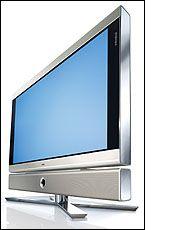
SPAM'S LAST GASP
It seems like a long time since I sat on the unmade bed of a teenage spammer in his dark bedroom in a middle class Auckland home in Mt. Eden, watching as he spammed hundreds of thousands of email addresses with banal adverts for something or other.
The guy was probably 18 at the time and he made a mint, tax free, working for his Russian and American masters. He had a Paypal account set up to receive his payments and switched internet providers regularly as they cottoned onto his spam scam. That was just a few years ago, when the spamming industry was in full swing. Companies were taking drastic action to save their mail servers from collapsing, worker productivity was going down the drain as people waded through inboxes full of junk mail and software companies sought a silver bullet solution to spam.
Now, as I suggest in this Herald column, spam has a terminal disease. It’s in decline, the world now familiar to its traits, the citizens of the internet savvy in their understanding of how to deal with it. The spam is still being sent but we’re actually confronted with only a fraction of it these days.
That spells the beginning of the end for the spammers. The business model is in the toilet. Most have already moved on to something entirely more lucrative, phishing, a particularly nasty web scam that involves shadowy figures tricking you into giving them your bank account information. They then clean you out leaving you staring incredulously at the eftpos terminal when the transaction comes up DECLINED.
Yep, a few incremental improvements technology wise and a bit of education is slowly buy surely relieving the pain of spam. I give it two more years before it’s all just a bad memory.
The guy was probably 18 at the time and he made a mint, tax free, working for his Russian and American masters. He had a Paypal account set up to receive his payments and switched internet providers regularly as they cottoned onto his spam scam. That was just a few years ago, when the spamming industry was in full swing. Companies were taking drastic action to save their mail servers from collapsing, worker productivity was going down the drain as people waded through inboxes full of junk mail and software companies sought a silver bullet solution to spam.
Now, as I suggest in this Herald column, spam has a terminal disease. It’s in decline, the world now familiar to its traits, the citizens of the internet savvy in their understanding of how to deal with it. The spam is still being sent but we’re actually confronted with only a fraction of it these days.
That spells the beginning of the end for the spammers. The business model is in the toilet. Most have already moved on to something entirely more lucrative, phishing, a particularly nasty web scam that involves shadowy figures tricking you into giving them your bank account information. They then clean you out leaving you staring incredulously at the eftpos terminal when the transaction comes up DECLINED.
Yep, a few incremental improvements technology wise and a bit of education is slowly buy surely relieving the pain of spam. I give it two more years before it’s all just a bad memory.
SATELLITE RADIO PART III: ARTHUR C. CLARKE
Finally, in this satellite special, an interview I did with one of my literary heroes, Arthur C. Clarke. I’d always wanted to talk to Clarke but though the sci-fi Arthur’s age and ill-health and my position as a lowly IT reporter would preclude any contact.  A couple of years later I rented a house off Peter Escher, an eccentric satellite fanatic who runs Satlink, a company that installs large satellite dishes for those who want to catch random feeds mainly in Chinese and French from the several satellites that can be picked up here for free if the dish is big enough and you’ve got one of Peter’s decoders.
Then I happened to be at some boring geekfest, I can’t remember what sort exactly, but scanning the agenda my eyes lit up at the description of the special guest: Arthur C. Clarke, via tele-link from his home in Sri Lanka. After some technical hitches, Clarke appeared on the screen, remarkably lucid and witty as well.
The floor was thrown open for people to ask him questions. The geeks hesitated, an awkward silence blanketed the room. So I got up, took the microphone and proceeded to conduct an interview with Clarke via tele-link in front of a couple of hundred people. It made my afternoon.
 A couple of years later I rented a house off Peter Escher, an eccentric satellite fanatic who runs Satlink, a company that installs large satellite dishes for those who want to catch random feeds mainly in Chinese and French from the several satellites that can be picked up here for free if the dish is big enough and you’ve got one of Peter’s decoders.
 It turns out Peter was a Clarke fan as well and had paid a visit to the aging author in Sri Lanka. The two had stayed in touch and while living on Peter’s property at the top of the Waitakeres under the Waiatarua TV transmitter, I’d get to read the email correspondence between the two. They chatted mainly about their dogs but even throw away comments by Clarke revealed the genius in the man. It’s one thing to be prolific, but to be prolific and good is an achievement.
Clarke is both. Prophet who brought outer space into everyday life
04.12.2001
Science fiction writers seldom see their fantasy worlds come to life, but the king of the genre, Sir Arthur C. Clarke, has watched his fair share of scientific predictions come to life in a writing career spanning half a century.
The 84-year-old who co-wrote the screenplay for 2001: A Space Odyssey rarely gives interviews, but checked in via an audio link from his home in Colombo, Sri Lanka, to chat with IT professionals attending the South East Asia Regional Computer Confederation held in Auckland.
Some 33 years after the psychotic HAL 9000 computer system took on a life of its own, terrorising its human crewmates in outer space, satellites, fax machines, videophones and laptops play important roles in our lives. And they all featured in Clarke's books long before they turned up as expensive prototypes. Clarke is impressed at the progress space exploration has made since 1950 when he wrote The Sentinel, a short story which became the basis for his epic film. But the end of the Cold War slowed the race for the stars, he says. "There was no great impetus to go to the planets. But I'm very happy we've reconnoitred all the planets. I never thought we'd do that in my lifetime."
Clarke's 80-plus science fiction books have given glimpses of radically different futures on Earth and beyond our universe. "In the words of my good friend Ray Bradbury, 'I don't try to describe the future, I try to prevent it'." But these days, his visions of the future stem no longer from pure imagination, but technology that man is just beginning to grasp.
"The next great revolution will be in energy," he says. "Future generations will regard us criminals for burning oil." Nanotechnology - building computers the size of molecules will also take giant leaps. And communications will link an ever increasing number of people, creating "electronic tribes" and bridging the digital divide. "There'll be no reason every village can't have its own satellite.
All you need is a satellite dish and a solar panel." But Clarke is still waiting for Nasa to bring one of his more unusual creations to life. He calls it the space elevator - mass transit to the stars. "The rocket's all we've got at the moment," he says. But a cable from a spacestation in stationary orbit down to a point on Earth carrying an electronically-powered elevator will cut out the need for rockets.
Clarke's fascination with technology was sparked by the science fiction comics of the 1930s. He later joined the RAF and was in charge of the first radar ground controlled approach during its trials in the Second World War. But a few things have caught Clarke by surprise. He had astronauts sending text messages to Earth in the 1960s, but totally missed the impact of the internet and e-mail.
But he did forecast our eventual dependence on telecommunications in his story Dial F for Frankenstein, where a telephone system becomes conscious and takes over the world. Voice recognition technology has also developed beyond his expectations. "I thought it would be way off. Now I use it here in my office." Of the artificial intelligence hinted at in his books but so far (thankfully) elusive, Clarke is ambivalent.
"It seems like we're closer to artificial stupidity at the moment. Artificial intelligence has been 20 years away for the last 50 years. That would make 2020 a reasonable date." The discovery of extra-terrestrial life is what Clarke is most excited about - something he believes would be "the greatest thing in human history". It is the one remaining thing he hungers to see discovered, but realises he is unlikely to.
"The best proof of intelligent life in outer space is the fact that it hasn't come here," he chuckles. The elder statesman of sci-fi is winding down his writing career. But work on a host of TV projects, film adaptations and documentaries will keep him busy. In particular, Clarke is excited about the big-screen version of his book Rendevous with Rama, starring Morgan Freeman.
Finally, Clarke - who has had post-polio syndrome since the mid-1980s and is in a wheelchair - wants to lay a 2001 myth to rest once and for all. Since Stanley Kubrick made Clarke's book famous with the film version of 2001: A Space Odyssey, rumours have persisted that HAL represented IBM. Conspiracy theorists noticed the letters preceding I, B and M in the alphabet spelled HAL. That was pure coincidence. HAL stands for Heuristic Algorithmic Computer and nothing more, Clarke says.
"I've been trying to stamp that rumour out for 30-plus years," he adds wearily. "If we'd noticed its resemblance at the time, we'd probably have changed it," he says, noting that IBM did not get upset about the association. Big Blue even gave him a Think Pad to write a second followup 3001: The Final Odyssey. Clarke is comfortable with the fact he will not be around to see the contents of that book fleshed out.
04.12.2001
Science fiction writers seldom see their fantasy worlds come to life, but the king of the genre, Sir Arthur C. Clarke, has watched his fair share of scientific predictions come to life in a writing career spanning half a century.
The 84-year-old who co-wrote the screenplay for 2001: A Space Odyssey rarely gives interviews, but checked in via an audio link from his home in Colombo, Sri Lanka, to chat with IT professionals attending the South East Asia Regional Computer Confederation held in Auckland.
Some 33 years after the psychotic HAL 9000 computer system took on a life of its own, terrorising its human crewmates in outer space, satellites, fax machines, videophones and laptops play important roles in our lives. And they all featured in Clarke's books long before they turned up as expensive prototypes. Clarke is impressed at the progress space exploration has made since 1950 when he wrote The Sentinel, a short story which became the basis for his epic film. But the end of the Cold War slowed the race for the stars, he says. "There was no great impetus to go to the planets. But I'm very happy we've reconnoitred all the planets. I never thought we'd do that in my lifetime."
Clarke's 80-plus science fiction books have given glimpses of radically different futures on Earth and beyond our universe. "In the words of my good friend Ray Bradbury, 'I don't try to describe the future, I try to prevent it'." But these days, his visions of the future stem no longer from pure imagination, but technology that man is just beginning to grasp.
"The next great revolution will be in energy," he says. "Future generations will regard us criminals for burning oil." Nanotechnology - building computers the size of molecules will also take giant leaps. And communications will link an ever increasing number of people, creating "electronic tribes" and bridging the digital divide. "There'll be no reason every village can't have its own satellite.
All you need is a satellite dish and a solar panel." But Clarke is still waiting for Nasa to bring one of his more unusual creations to life. He calls it the space elevator - mass transit to the stars. "The rocket's all we've got at the moment," he says. But a cable from a spacestation in stationary orbit down to a point on Earth carrying an electronically-powered elevator will cut out the need for rockets.
Clarke's fascination with technology was sparked by the science fiction comics of the 1930s. He later joined the RAF and was in charge of the first radar ground controlled approach during its trials in the Second World War. But a few things have caught Clarke by surprise. He had astronauts sending text messages to Earth in the 1960s, but totally missed the impact of the internet and e-mail.
But he did forecast our eventual dependence on telecommunications in his story Dial F for Frankenstein, where a telephone system becomes conscious and takes over the world. Voice recognition technology has also developed beyond his expectations. "I thought it would be way off. Now I use it here in my office." Of the artificial intelligence hinted at in his books but so far (thankfully) elusive, Clarke is ambivalent.
"It seems like we're closer to artificial stupidity at the moment. Artificial intelligence has been 20 years away for the last 50 years. That would make 2020 a reasonable date." The discovery of extra-terrestrial life is what Clarke is most excited about - something he believes would be "the greatest thing in human history". It is the one remaining thing he hungers to see discovered, but realises he is unlikely to.
"The best proof of intelligent life in outer space is the fact that it hasn't come here," he chuckles. The elder statesman of sci-fi is winding down his writing career. But work on a host of TV projects, film adaptations and documentaries will keep him busy. In particular, Clarke is excited about the big-screen version of his book Rendevous with Rama, starring Morgan Freeman.
Finally, Clarke - who has had post-polio syndrome since the mid-1980s and is in a wheelchair - wants to lay a 2001 myth to rest once and for all. Since Stanley Kubrick made Clarke's book famous with the film version of 2001: A Space Odyssey, rumours have persisted that HAL represented IBM. Conspiracy theorists noticed the letters preceding I, B and M in the alphabet spelled HAL. That was pure coincidence. HAL stands for Heuristic Algorithmic Computer and nothing more, Clarke says.
"I've been trying to stamp that rumour out for 30-plus years," he adds wearily. "If we'd noticed its resemblance at the time, we'd probably have changed it," he says, noting that IBM did not get upset about the association. Big Blue even gave him a Think Pad to write a second followup 3001: The Final Odyssey. Clarke is comfortable with the fact he will not be around to see the contents of that book fleshed out.
"I like to write a million years out. So no one can correct me."
SATELLITE RADIO PART II
A Q&A with IPStar spokesman John Humphrey.
Is IPStar looking into digital satellite radio for this part of the world?
 No, not to my knowledge at least. The current IPSTAR-1 satellite is not designed for Satellite Digital Audio Radio Service (S-DARS). The service requires a dedicated number of one-way transponders usually operating in S-band (US) or L-band (Europe). The transponders have to be reasonably high powered to provide connectivity to the small antennas used in cars or to the internal antennas in devices. IPSTAR was designed for two-way Internet access into 50 cm + antennas.
Has Shin done any digital satellite radio services in Asia yet?
No. There is only WorldSpace in Asia I think. This only has coverage down to NW Australia. (http://www.worldspace.com/)
Are these services hard to provide?
As above, requires a purpose designed and built satellite. It also requires coordination with terrestrial spectrum users so that ground based services cannot operate in the same frequencies (which would cause interference).
Do you think there'd be a market for them in a place like New Zealand?
We are so far away from the large concentrations of population (Asia, Europe & US) that designing a bird with coverage extending to NZ would not traditionally have the economics required. However, who knows in the future with advances in satellite capacity per build dollar (such as IPSTAR-1) but my guess is that such a business case will be tenuous for some time. I am sure if it could be provided there would be a sizeable market in NZ. You only have to look at the figures for the US.
Q&A with Altec Lansing senior vice president of sales and marketing, Robert Heiblim.
Does Altec Lansing have speakers designed specifically for digital satellite radio players (either in-car or portable models) in the market in other parts of the world?
Altec Lansing's speaker systems for satellite radio currently are limited to the U.S. and Canada markets. We have partnered with one of the leading services in this industry. Through this partnership, we have been educated about the market and user needs, and we will assess each opportunity moving forward based on the market and user needs.
What does Altec Lansing see as the appeal in the technology? Aren't most people well serviced by existing terrestrial radio services?
Satellite radio plays a different role than local terrestrial broadcast. Local broadcasting provides listeners with local news, weather, traffic, ads and other regional matters they need. Satellite radio focuses more on entertaining listeners. The appeals in satellite radio are the quality of sound that comes with digital audio, the variety of program content and the fact that you can access the same content no matter where you are located. Altec Lansing and XM Satellite radio have a similar approach to product development: we aim to provide a sound enhancement solution to the digital audio market, and we give users a wide variety of listening experiences to match their lifestyle needs. Consumers appreciate the freedom of choice.
How important a market is digital satellite radio to Altec Lansing? Does the company project big growth in this market in 2006?
Our speaker systems for XM Satellite Radio fall under our on-the-go, versatile speaker and digital home audio speaker categories. These were our top-selling categories in 2005. We expect our satellite radio speaker systems to take up a larger share of these categories in 2006.
If other digital radio satellite services come to market, will the existing Altec Lansing digital satellite radio player speakers be able to work with them or are they XM Radio specific?
Although our speaker systems for satellite radio are XM specific, they all contain an auxiliary jack for connection to other portable digital audio devices.
Graphics from reports by Vintage Research and Bernstein Research supplied by John Humphrey.
THE PROBLEM WITH RADIO, SATELLITE RADIO
As excited as I am about digital satellite radio after seeing XM Radio in operation in the US, there’s little chance of a similar service being rolled out here. As my article in the Herald today explains, the local satellite players, chiefly pay-TV operator Sky and satellite wannabe Nzlsat which has been granted a slot to launch its own bird, don’t have satellite radio in their sights.
Nor does IPStar, a subsidiary of Thailand-based Shin Satellite, which has one of the biggest commercial satellite’s ever launched positioned over the South Pacific. That satellite is capable of delivering two-way, high-speed broadband to the whole of New Zealand. IPStar’s New Zealand spokesman, John Humphrey was unavailable for comment before press time but I’ve posted some remarks from him below and excerpts from a useful report he sent me on the state of play in satellite radio in the flourishing US market.
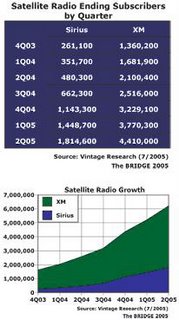 I guess I’ve been turned onto the idea of satellite radio through listening extensively to internet radio stations. I simply place my lightweight laptop beside my stereo, connect the two via an audio input and I’ve got the BBC World Service or any other station I want to listen to, piped through my speakers. That’s great when I’m at home, but radio is the companion of the traveler, the commuter. There’s a reason one of most popular segments of the radio day is “drive time”. That’s when everyone’s in their cars, a captive audience of hundreds of thousands.
Satellite radio would let these people listen to a large selection of specialist stations. With companies like Audible specializing in spoken-word programming – audio books and talk shows, the traditional concept of radio is changing. In a mirroring of the pay TV model, smaller audiences are spread across a large number of usually commercial-free channels. Subscription fees are instead charged. Imagine that, continuous music uninterrupted by the inane banter of radio jocks. Alas, it’s not going to be that way here.
Nor does IPStar, a subsidiary of Thailand-based Shin Satellite, which has one of the biggest commercial satellite’s ever launched positioned over the South Pacific. That satellite is capable of delivering two-way, high-speed broadband to the whole of New Zealand. IPStar’s New Zealand spokesman, John Humphrey was unavailable for comment before press time but I’ve posted some remarks from him below and excerpts from a useful report he sent me on the state of play in satellite radio in the flourishing US market.
 I guess I’ve been turned onto the idea of satellite radio through listening extensively to internet radio stations. I simply place my lightweight laptop beside my stereo, connect the two via an audio input and I’ve got the BBC World Service or any other station I want to listen to, piped through my speakers. That’s great when I’m at home, but radio is the companion of the traveler, the commuter. There’s a reason one of most popular segments of the radio day is “drive time”. That’s when everyone’s in their cars, a captive audience of hundreds of thousands.
Satellite radio would let these people listen to a large selection of specialist stations. With companies like Audible specializing in spoken-word programming – audio books and talk shows, the traditional concept of radio is changing. In a mirroring of the pay TV model, smaller audiences are spread across a large number of usually commercial-free channels. Subscription fees are instead charged. Imagine that, continuous music uninterrupted by the inane banter of radio jocks. Alas, it’s not going to be that way here.
16 Jan 2006
CES: GAMBLING ON GADGETS AND THE INTERNET
I’m linking to my Herald on Sunday column for those with a premium content subscription. It’s about the massive Consumer Electronics Show held earlier this month in Las Vegas. I’m pretty jaded with tech shows but I wish I’d got to that one. By all accounts it was pretty impressive.
As I wrote in the paper: “The hi-tech orgy revealed what the industry is doubling its bets on this year: high-definition movies, players and TV screens, video game consoles, computers for the living room, mobile gadgets and, most significantly, the internet.”
Oh yeah, the Internet. 2005 certainly made me look at it in a different way because of the new free services it offered up (see The Free Face of the Web below). Google will continue to be the company to watch though there may be a little cooling off in demand for its shares as competitors catch up with the internet juggernaut. The Google Print project may be stymied this year by legal action, but the alliance with Sun, Google Video and the company’s expansive partnership plans will be interesting to watch.
I’m less enthusiastic about the Windows Live concept, it seems like a foregone conclusion and doesn’t seem to add much that isn’t already out there and easy to access. But I am looking forward to Vista.
By the way, I’ve been watching some high definition video clips fed from Windows Media player 10 through to a beautiful Loewe LCD TV screen I’m testing at the moment and the results are pretty impressive. Who needs a media centre PC when you can plug your laptop in and get a ready-made entertainment hub?
As I wrote in the paper: “The hi-tech orgy revealed what the industry is doubling its bets on this year: high-definition movies, players and TV screens, video game consoles, computers for the living room, mobile gadgets and, most significantly, the internet.”
Oh yeah, the Internet. 2005 certainly made me look at it in a different way because of the new free services it offered up (see The Free Face of the Web below). Google will continue to be the company to watch though there may be a little cooling off in demand for its shares as competitors catch up with the internet juggernaut. The Google Print project may be stymied this year by legal action, but the alliance with Sun, Google Video and the company’s expansive partnership plans will be interesting to watch.
I’m less enthusiastic about the Windows Live concept, it seems like a foregone conclusion and doesn’t seem to add much that isn’t already out there and easy to access. But I am looking forward to Vista.
By the way, I’ve been watching some high definition video clips fed from Windows Media player 10 through to a beautiful Loewe LCD TV screen I’m testing at the moment and the results are pretty impressive. Who needs a media centre PC when you can plug your laptop in and get a ready-made entertainment hub?
9 Jan 2006
THE GORILLA AND THE SPIKE
When you work for the newspaper as a staff writer you'll find that overall, maybe a third of the copy you write never makes it into print. It's either trimmed away by tight-fisted sub editors or just gets "spiked" completely because the paper fills up with something more important.
The story below was spiked on Saturday night and therefore didn't make the Herald on Sunday. As a freelancer, that's a major pain in the ass because you don't get paid unless the article makes it into print and then only for the number of words published. If those subs are in a bad mood you can end up putting in a day's work for 250 words.
Here then is the spiked story. I'd set out to write a story about how disappointing King Kong must be to an industry that had expected it to beat every other holiday blockbuster and bring in Titanic-esque box office takings. The reality is that no one in Hollywood, whatever their views on whether the 20 extra minutes should have gone in or not, really cares that Kong will take in less at the box office than Narnia. Or if they are they're not really saying so on the record.
The analysts at least seem happy and have distanced themselves from the frenzy of hype that preceded the film's release last month. Kong will easily pass the US$200 million box office takings total that is so crucial to movies with its sort of budget. It and Narnia saved 2005 from being a complete box office fizzer, something for which the industry appears very grateful. Jackson's backend won't have suffered too much and as Reel Source's Robert Buckbaum points out, Jackson is still the king of Hollywood, capable no doubt of commanding another US$20 million pay check for some upcoming special effects-laden blockbuster.
ENTERTAINMENT
by Peter Griffin
by Peter Griffin
Peter Jackson’s 187 minute epic King Kong looks unlikely to claim the top spot at the US box office this weekend but entertainment industry pundits say the film maker is still on track to deliver a multi-billion dollar earner for movie studio Universal.
Box office monitoring company Reel Source is picking Andrew Adamson’s The Chronicles of Narnia: The Lion, the Witch and the Wardrobe or Lionsgate’s debuting horror Hostel to land in the number one position for the second weekend of the year.
Analyst company BoxOfficeGuru expects New Zealand-made Narnia to win out this weekend, relegating Kong to number five in the rankings of the biggest grossing movies of 2005.
“Narnia now looks to reach US$275 million plus from North America,” said BoxOffoceGuru editor Gitesh Pandya.
“If you asked people in early December if they thought Narnia would eventually beat Kong by over US$50 million, they would have laughed at you.”
“But that’s really not the point,” said Reel Source president and theatre owner Robert Bucksbaum.
“It's pretty insane to say a film that grossed over US$180 million in less than four weeks failed to make expectations.”
Entertainment industry analysts had expected King Kong to break financial records with its cinematic debut, but Narnia, which had a smaller production budget than Kong and was released with a five day headstart, took US$230 million in the same period leading many pundits to the conclusion that Kong’s long running time has stunted its earning potential.
As a rule of thumb, films usually have to make three times their production budget to break even. It’s not unusual for a holiday blockbuster to make its money back at the US box office alone, but Mr Bucksbaum says the days of big daily box office returns are fading for Kong as new films arrive in theatres.
“If Kong doesn't receive an Oscar nomination for Best Picture, we expect revenues to top out at approximately US$220 million in North America, not too shabby,” he said.
Kong would continue to generate revenue in “ancillary markets” for years to come.
Kong would continue to generate revenue in “ancillary markets” for years to come.
Worldwide box office takings for Kong were at US$418 million and climbing. Mr Pandya is forecasting total worldwide box-office takings of at least $500 million. Then there would be sales of the DVD, deals with pay TV and free to air broadcasters, merchandising, video games and the theme park ride.
“People consider Waterworld a bomb but they don't realize the fact that Universal is making billions from the concept at their theme parks. Expect more of the same for Kong,” said Mr Bucksbaum,
Nevertheless, with the hype surrounding Kong at fever pitch months out from the release of the movie, which was widely expected to trounce Narnia, Universal executives are no doubt wondering why Kong didn’t come out on top for the holiday season.
“Making a movie about a big ape in today's technologically savvy marketplace is not an easy sell. With that said, Peter Jackson created a masterpiece so you should be proud of your hometown hero,” Mr Bucksbaum added.
He said Reel Source had always picked Narnia as the winner from the two New Zealand produced blockbusters due to its appeal to family values.
“Narnia is a family film released during a family holiday so we expected the film to perform better than Kong.”
Peter Jackson’s total back-end earnings for Kong are linked to the total the film earns for Universal but Mr Bucksbaum said Jackson was still king in Hollywood as the movie would end up being very profitable.
“I don't think Peter is worrying too much about his Kong salary. He won't have to leave his day job anytime soon - any studio would happily give him a few hundred million to make his next film.”
7 Jan 2006
WETA DOES SHEEP
Some artwork has appeared on Weta Workshop's website for the intriguing horror movie Black Sheep which I understand is being shot around Wellington over the summer.


According to the Film Makers, Black Sheep tells the story of "a genetic experiment gone horribly wrong; the sheep start turning nasty and it’s the people that begin to bleat."


According to the Film Makers, Black Sheep tells the story of "a genetic experiment gone horribly wrong; the sheep start turning nasty and it’s the people that begin to bleat."
It's a horror comedy written and directed by first timer Jonathan King and produced by Philippa Campbell (Rain, No. 2) and should do nicely off the momentum created by Australian horror Wolf Creek which is reportedly so graphic and convincing some viewers have had to leave the theatre during viewings.
Black Sheep is interesting for a few reasons. Weta's involvement obviously lends a lot of credibility to the project and you can bet the mutant sheep they come up with will look fantastic. The few bits of artwork Weta is showing off have an incredibly menacing look, like Footrot Flats gone wrong.
Richard Taylor, Peter Jackson's right hand man, is overseeing the making of the killer sheep and sees Black Sheep as harking back to the Brain Dead and Bad Taste splatter days.
As Taylor told Sci Fi Wire:
"It's wonderful for us, because it affords us the ability to go back to our roots, to go back to animatronics. It will be mostly done with puppetry and animatronic work. The script is beautiful, and that's where it all starts. It's funny. It's scary. It's wonderful fun, with crazed, bloody, animatronic sheep. The deadline is very, very short, so we have to bring all of our innovative thought to bear on it, but we're all excited about it."
It's also interesting because it's backed by the New Zealand Film Commission. This project and the vampire thriller Perfect Creature show more than any other productions the commission has been involved with yet that they're willing to punt on very commercial movies.
It's also one of the first New Zealand films financed through a Korean co-production, in this case with the Daesung Group, which put money into the cult hit Old Boy (but also the clanger Around the World in 80 Days). Hopefully this type of funding continues.
Black Sheep has aleady been pre-sold to the distribution company Icon for territories including the United Kingdom, Australia and New Zealand and three Asian territories have already been sold. That was all wrapped up before the movie had even gone into production which is impressive. The script and concept art must be fantastic.
2 Jan 2006
COLD HARD FACTS
If you want an insightful look at the situation in earthquake-devastated Northern Pakistan pick up a copy of this week’s Listener. My friend Jon Stephenson spent a week in the region last month and met dozens of earthquake survivors, including the poor woman who had just been dug out of the rubble after 60 odd days.
His piece paints an interesting picture of the apparent failings in the humanitarian aid effort currently under way there. His special report, like the features he wrote for Metro about Iraq and the West Bank last year, is a very good read.
It was good to see more coverage of the Pakistan situation around Christmas as the news networks wrapped up the disasters of the year, starting with the aftermath of the tsunamis of Christmas 2004. But by and large, the disaster in Pakistan which made three million people homeless as the country was plunged into winter has been majorly under-reported.
Jon has covered a number of Middle Eastern conflicts in the last few years and does it all on the smell of an oily rag. He never gets “embedded” or engages in the hotel journalism better resourced reporters make do with. He travels anonymously, wearing the same garb as the people of the country he is visiting, working quietly with a trusted fixer, taking the road less traveled.
When Jon went to Pakistan at the height of the US invasion of Afghanistan in 2001, I told him he didn’t have a shit show of getting across the border to cover the war. The next thing I saw was a report in the Sunday Star Times where he was reporting from Tora Bora, which saw some of the most vicious fighting of the war. His type of journalism is dangerous, overlooked and badly paid. But it’s needed to fill in the gaps in coverage provided by the big media organizations. I know Jon’s got plenty more planned for 2006 so keep an eye out for his work in print and on TV.
UPDATE: Scoop has posted some of Jon's photographs from Pakistan.
His piece paints an interesting picture of the apparent failings in the humanitarian aid effort currently under way there. His special report, like the features he wrote for Metro about Iraq and the West Bank last year, is a very good read.
It was good to see more coverage of the Pakistan situation around Christmas as the news networks wrapped up the disasters of the year, starting with the aftermath of the tsunamis of Christmas 2004. But by and large, the disaster in Pakistan which made three million people homeless as the country was plunged into winter has been majorly under-reported.
Jon has covered a number of Middle Eastern conflicts in the last few years and does it all on the smell of an oily rag. He never gets “embedded” or engages in the hotel journalism better resourced reporters make do with. He travels anonymously, wearing the same garb as the people of the country he is visiting, working quietly with a trusted fixer, taking the road less traveled.
When Jon went to Pakistan at the height of the US invasion of Afghanistan in 2001, I told him he didn’t have a shit show of getting across the border to cover the war. The next thing I saw was a report in the Sunday Star Times where he was reporting from Tora Bora, which saw some of the most vicious fighting of the war. His type of journalism is dangerous, overlooked and badly paid. But it’s needed to fill in the gaps in coverage provided by the big media organizations. I know Jon’s got plenty more planned for 2006 so keep an eye out for his work in print and on TV.
UPDATE: Scoop has posted some of Jon's photographs from Pakistan.
1 Jan 2006
Revenge is a dish best served cold...
 After exhausting the holiday reading materials I picked up at The Warehouse for a very reasonable $15 (Robert Lacey's The Year 1000, Bob Woodward's Bush at War and Robert Harris' Pompeii), I found myself browsing the dusty paperbacks lining my parents' bookshelf. I came across an old favourite of mine, Stephen King's superb collection of short stories, Nightmares and Dreamscapes.
 The collection was released in 1992 and while all of the stories (bar the non-fiction New Yorker piece Head Down which deals in intricate detail with Baseball) are great only one has stayed with me during ten years since I first read the collection - Dolan's Cadillac.
I love stories of revenge, not hot-headed, passionate reprisals but stories about the vengeful who wait calmly for years to pass before they mete out their perfectly conceived pay back. Robinson, the main character in Dolan's Cadillac is such a person. The story outlines his ten year pursuit of the crime boss who was responsible for his wife's death. It involves a Cadillac, some heavy machinery and a 42 foot hole in the Nevada highway. It's King's best short story of those included in the four large collections he's so far put out. There was talk at one stage of making it into a movie. I hope it comes off because, done properly, this could be very good on screen. Unfortunately, many of King's adaptations turn out crap. For every Shawshank Redemption there's a Tommy Knockers and Riding the Bullet.
Maybe I'm drawn to Dolan's Cadillac once again because I'm attempting my own story of revenge for a screenplay. Only my character lacks the cool resolve of Robinson making him a lot less dangerous...
Here's a sneaky excerpt from Dolan's Cadillac:
"Then came the dumpsters with their fresh loads of gravel, follwed by the spreaders and rollers. After them the big tankers would arrive, the ones with the big wide sprayer attachments on the backs and their smell of hot tar, so like melting shoe leather. And when the fresh asphalt had dried , along would come the lining machine, the driver under his big canvas parasol looking back frequently to make sure the broken yellow line was perfectly straight, unaware that he was passing over a fog-gray Cadillac with three people inside, unaware that down in the darkness there was a ruby ring and a gold Rolex that might still be marking off the hours..."
According to Stephenking.com, Nightmares and Dreamscapes is being made into an eight X one hour TV series. That explains the rumour about Dolan's Cadillac being adapted. The story could be very nicely told in 45 minutes (the rest of the slot taken up by adverts. Some decent screenwriters, including Larry Cohen, who adapted King's IT and Carrie are writing the scripts so it looks promising.
Also, King is putting out The Secretary of Dreams, a reissue of half a dozen of his short stories in graphic novel format, accompanied by illustrations in pulp horror comic style. Included are a couple of my favourites, The Road Virus Heads North and Home Delivery.
I'll be putting in a order through Paypal for that one. If any contemporary author shows there is huge interest and appeal in overlooked form of literature, the short story, it's Stephen King.
Big things tech for 2006
Happy New Year! Whatever you got up to last night, I'm sure your celebrations were livlier than mine which involved drinking martinis with my family while a terrible TV special by the people behind the Back of the Y accompanied us into 2006.
What will be big in 2006 tech wise? I've written my Herald on Sunday column on just that topic. You can read it here if you've a subscription to the Herald Online. But it basically boils sown to this in my opinion:
1. Apple and the iPod have about another year's grace before anyone has a chance of catching up with them. The iPod will have wireless built-in for seamless syncing with iTunes. The TV content deals Apple is striking in the US will become more sophisticated, especially when the TiVo software that allows you to transfer recorded content from your PVR directly to your video iPod becomes widely available.
I can see the iPod adopting a digital satellite tuner and Apple getting into bed with an operator like XM Satellite, which operates dozens of radio stations beamed off satellites positioned over North America. The advantage of satellite radio is that you can pick up the same radio feed wherever you are and more channels can be broadcast at better quality. There are many digital satellite radio receivers on the market but imagine how powerful the iPod will be if a digital radio receiver is built into it and iTunes users can subscribe to pick up various radio stations.
I doubt the Motorola ROKR, the phone that hosts the iTunes store will survive. It will go down as one of the big failures of 2005. But I can see a better phone that allows users more flexibility taking off this year.
2. Blu Ray and HD-DVD players will hit the market eventually transforming how we store media. The two flavours of technology basically let you do the same thing - let you store upwards of 25GB of data on a single disk. The average hard drive is around 60GB. So with two or three disks you'll be able ot back-up the entire contents of your hard drive uncompressed. That's very useful. The disks have so much capacity on them that there'll be no excuse for three-disk box sets for movies. Everything will fit on one disk in high-definition quality. The big drawback with Blu Ray and HD-DVD is that you need a high definition TV set to see the content in high definition. A small but rapidly rising percentage of TV screens in this country support high definition. The market will take the whole year to settle down. The CES consumer electronics show being held in Las Vegas later this month will showcase new devices like Pioneer's Blu-Ray drive for computers. The technology means less shagging around with CDs and DVDs, more ease in recording long stretches of TV and once the entertainment industry gets its act together, movies released to the home video market in much better quality than standard definition DVDs now deliver. I can't wait.
3. Microsoft's Xbox 360 may not have got the Japanese excited but who would it? You would'nt expect the Ford Taurus to do well in Japan. They're a patriotic bunch when it comes to technology and Sony's Playstation reigns supreme. Elsewhere the Xbox 360 has been selling out leading to ludicrous bids being placed on eBay for the consoles being flogged for those with their eye on high denomination greenbacks rather than high quality gaming graphics.
Surprisingly, with hype around the 360 and the gaming industry in general at feverpitch, the game publishers are talking downturn. The theory is that with the release of the Xbox 360 and the pending release on the Playstation 3 and the Nintendo Revolution, gamers with the old consoles are holding off buying gaes until they've invested in the next generation of hardware. Is the games industry ever happy with the billions they take?
The Xbox 360 will be huge in 2006, especially if Microsoft and Bungie get it together and release Halo 3 during the year. These next generation gaming consoles are unlike anything we've seen before. Their graphics processing power is staggering. And they combine gaming with wider entertainment options like live TV recording, playing music and internet access. As such the 360, which goes on sale here on March 2 and PS3 will be the most functional gadgets to capture our attention in 2006. The problem will be getting enough of them out of Chinese factories to meet global demand.
4. The so-called PMP (personal media player) took its baby steps in 2005 but was held back by high pricing and a lack of understanding of where it fits in the market. The PMP is a small tablet with LCD screen that’s generally smaller than a portable laptop. It has the ability to play video and audio and display photos and documents and is  usually wi-fi enabled so can connect to the internet over a wireless network. It’s ideal for use around the house though many of them are also small enough to carry with you. Manufacturers such as Creative, iRiver, Archos and Nokia are already in the PMP camp but the fall in price of laptops has made these new devices expensive by comparison. Nevertheless, the huge demand for digital media and the lure of having a high-resolution, full-colour screen handy will ensure its success. Think of Sony’s PSP but with music, video and pictures rather than gaming at the forefront.
www.creative.com
5. Methanol-based fuel cells will debut in 2006 in Japan with the aim of meeting the power-hungry demands of increasingly sophisticated gadgets. The power cells will initially appear as external “gas tanks” that can be connected to electronic devices to charge their batteries, but eventually will be built into mobile phones, music players and laptops. Toshiba has already shown prototypes of its Gigabeat music player powered by a fuel cell and the race is on among laptop makers to come up with the best designed fuel cell. The technology will increase the battery life of electronics and remove the need to connect to a power supply to recharge. They promise to be more fuel efficient with the cells replenished by adding a few drops of methanol to the tank.
 usually wi-fi enabled so can connect to the internet over a wireless network. It’s ideal for use around the house though many of them are also small enough to carry with you. Manufacturers such as Creative, iRiver, Archos and Nokia are already in the PMP camp but the fall in price of laptops has made these new devices expensive by comparison. Nevertheless, the huge demand for digital media and the lure of having a high-resolution, full-colour screen handy will ensure its success. Think of Sony’s PSP but with music, video and pictures rather than gaming at the forefront.
www.creative.com
5. Methanol-based fuel cells will debut in 2006 in Japan with the aim of meeting the power-hungry demands of increasingly sophisticated gadgets. The power cells will initially appear as external “gas tanks” that can be connected to electronic devices to charge their batteries, but eventually will be built into mobile phones, music players and laptops. Toshiba has already shown prototypes of its Gigabeat music player powered by a fuel cell and the race is on among laptop makers to come up with the best designed fuel cell. The technology will increase the battery life of electronics and remove the need to connect to a power supply to recharge. They promise to be more fuel efficient with the cells replenished by adding a few drops of methanol to the tank.
Subscribe to:
Posts (Atom)


